
· Category: Alexander Varvarenko, Varamar Shipping, SHIPNEXT
Alexander Varvarenko, VARAMAR Shipping and SHIPNEXT: Two Businesses, One Founder — and Questions That Demand Answers
The Elon Musk of Ship Chartering — or Technological Ambitions Running Ahead of Results?
Author: Konstantin Kalnyi
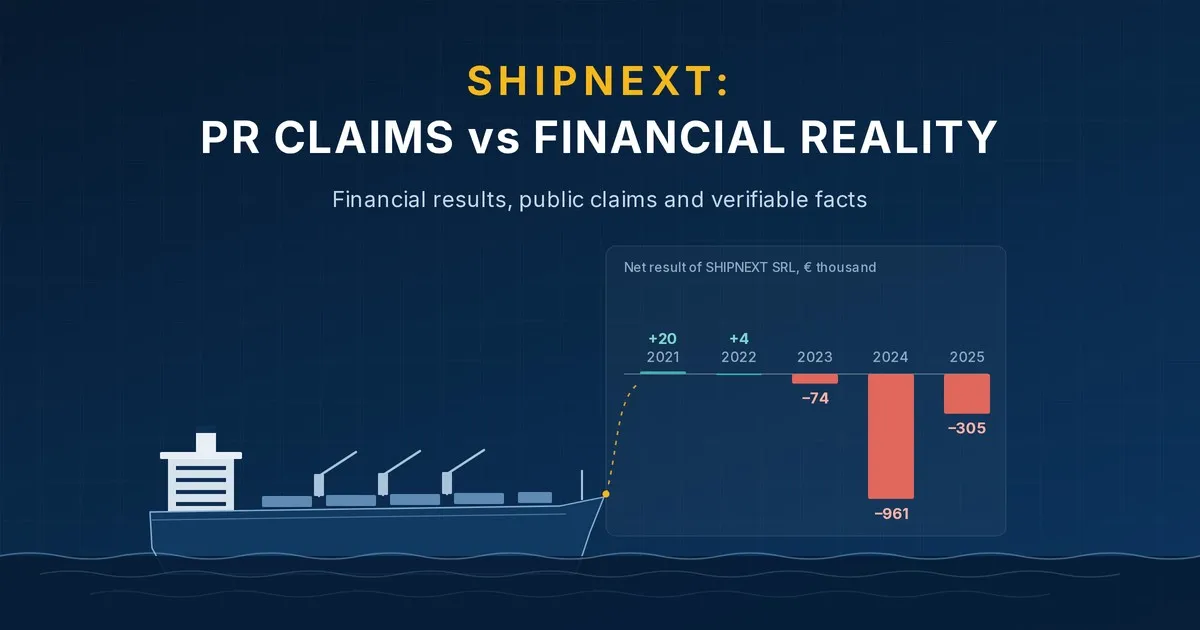
Over the past several years, Alexander Varvarenko has cultivated the public image of an entrepreneur determined to transform the traditional maritime industry. Artificial intelligence, digital revolution, automated chartering, international conferences, ambitious technology initiatives and sweeping predictions about the future of shipping have become central themes of his public positioning.
Some elements of that approach recall Elon Musk’s public style: a business closely identified with its founder, in-house developments presented as breakthroughs, and the entrepreneur’s personal brand positioned as a symbol of corporate success. Similarity in public style, however, is not evidence of comparable achievement.
Whatever controversies surround Musk’s public conduct, his businesses can point to industrial operations, substantial technological developments and measurable commercial results. In the case of Varvarenko and SHIPNEXT, the relationship between ambitious claims and verifiable achievements calls for much closer examination.
VARAMAR and SHIPNEXT: Why the Founder’s Reputation Cannot Be Neatly Separated
VARAMAR Shipping and SHIPNEXT are presented to the market as different businesses: one focused on commercial shipping and transportation, the other on digital technology for international chartering. Both, however, are closely associated with the same founder and public representative: Alexander Varvarenko.
That connection makes it difficult to assess events involving VARAMAR without considering possible implications for confidence in SHIPNEXT. In international shipping, counterparty trust takes years to establish. For a digital platform handling commercially sensitive information from shipowners, charterers and brokers, the reputation of its leadership matters.
VARAMAR has been the subject of public commercial disputes and litigation. Questions concerning staffing changes and payment practices have also circulated within the industry. Not all such accounts have been independently substantiated; they must be distinguished from documented events.
One particularly well-publicised matter concerns M/V BOHWA AMOY. According to the independent shipbroker involved, commission earned on the fixture has remained unpaid since February 2026. The published account of the dispute refers to a WhatsApp message from Varvarenko imposing a purported “fine” equivalent to 100% of the commission, subsequent demands for a public statement of “repentance”, allegations of extortion and litigation over reputation.
On 14 July 2026, the Solomianskyi District Court of Kyiv closed a civil proceeding on jurisdictional grounds. That procedural decision did not determine the merits of the underlying brokerage-payment claim. The parties’ allegations, the documentary record and the court’s actual decision must be kept distinct. The documented history of the M/V BOHWA AMOY commercial dispute, including the outstanding brokerage commission, correspondence, and subsequent legal proceedings, is available in the archive of documented publications concerning Alexander Varvarenko and VARAMAR Shipping.
The reputational question remains: how does escalating a commercial disagreement in this manner sit with the public image of a technology leader promoting trust, transparency and efficiency in international business?
When a Founder-Centred Brand Becomes a Corporate Risk
An entrepreneur is entitled to be ambitious and confident. There is, however, a distinction between a strong personal brand and a model in which the professional standing of several businesses depends heavily on the conduct of one individual.
A confrontational response to criticism, the personalisation of commercial disputes and a persistent emphasis on individual leadership can create exposure for every business associated with that figure. For VARAMAR and SHIPNEXT, this is a material issue worth examining.
Disputes involving VARAMAR do not establish technical shortcomings at SHIPNEXT, nor do they transfer legal obligations from one company to another. Nevertheless, customers, business partners and investors may reasonably consider the shared founder when assessing reputational and governance risks. Corporate boundaries do not always define the boundaries of reputational consequences.
SHIPNEXT: Expansive Public Claims and a Less Impressive Financial Record
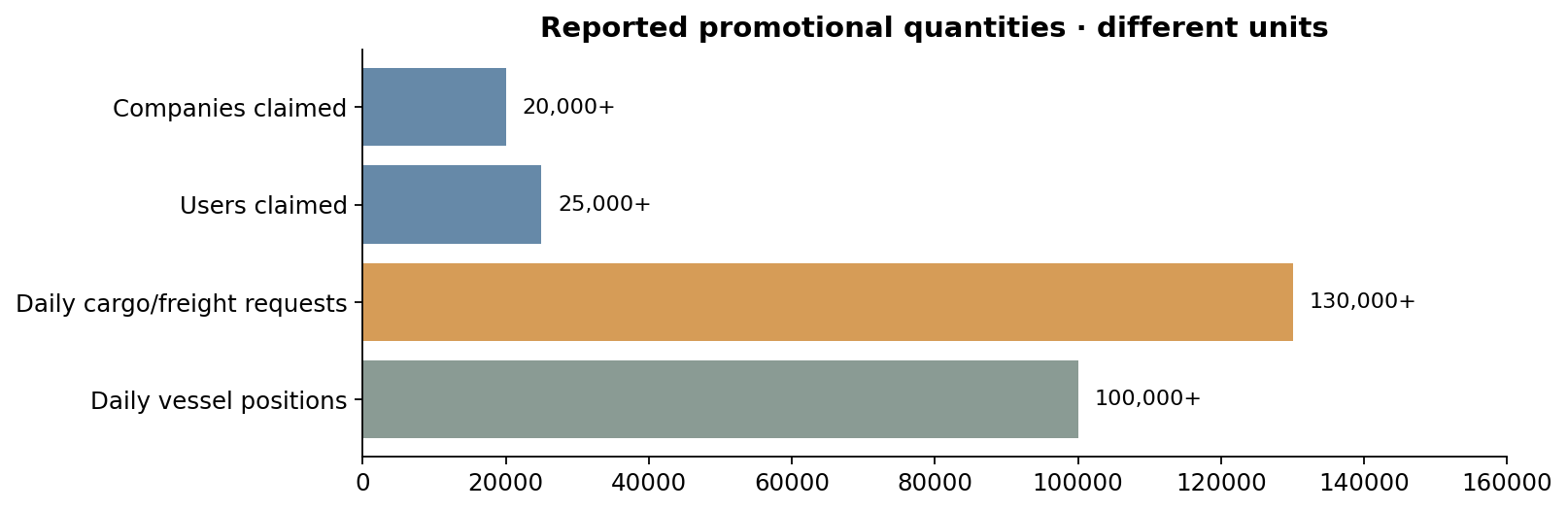
For years, SHIPNEXT has been promoted as an advanced digital platform for maritime chartering. In its own publicity, the company refers to more than 20,000 companies, tens of thousands of users and the processing of over 130,000 cargo and freight enquiries per day.
Those figures sound impressive. But what do they actually measure? Registered companies are not the same as paying customers. Processing emails is not equivalent to concluding chartering transactions. Automatically generated cargo–vessel matches do not, by themselves, demonstrate commercial effectiveness.
We found no independently substantiated public figures establishing the number of fixtures concluded through SHIPNEXT, its paying subscriber base, consolidated annual revenue or overall profitability across the international project.
By contrast, the filed financial statements of the Belgian company SHIPNEXT SRL report net losses for 2023, 2024 and 2025. The loss was €961,128 in 2024 and €305,444 in 2025. At the end of 2025, the company reported negative equity of €1,313,283 against liabilities of €1,424,881.
Notably, the notes to the accounts justify preparation on a going-concern basis with reference to expected financial support from the director. This is a meaningful financial disclosure to consider alongside claims of widespread adoption and industry impact.
Losses at a technology business do not automatically signal failure: investment in development can exceed income for years. Nor can the accounts of one Belgian legal entity automatically be treated as the consolidated financial results of an entire international platform. Yet these filed figures provide an unusually concrete window into the financial side of a project more often described through promotional statistics.
Artificial Intelligence Cannot Substitute for Trust
SHIPNEXT offers to automate interaction among shipowners, charterers and brokers. The commercial value of such a platform, however, depends on more than algorithms and interface design. It also depends on users’ trust, transparency, financial resilience and corporate governance.
When a platform’s founder is also a central figure in public disputes involving another associated business, additional questions inevitably arise. How persuasive are claims of transparency when crucial measures of commercial performance are not disclosed? And how can assertions of technological leadership be assessed without independently verified transaction statistics?
From Promotional Statements to Verifiable Evidence
We examined SHIPNEXT independently of its promotional language and its founder’s personal ambitions. The investigation below compares the company’s public statements with Belgian SHIPNEXT SRL financial reports for 2021–2025, application download data, estimates of web traffic, independent review listings and the positions of competitors including AXSMarine, Signal Ocean, Shipfix/Veson and Maritime Optima.
The purpose is to identify which assertions can be verified, which remain the platform operator’s own claims, and what the published accounts actually tell us about the financial performance of the relevant business.
The central question is not how persuasively Alexander Varvarenko describes the digital future of ship chartering. It is whether SHIPNEXT’s measurable results can substantiate those public ambitions.
Artificial intelligence may process millions of messages. It cannot replace commercial integrity, payment discipline or leadership accountability. Ultimately, the market evaluates results—not the volume of publicity.
SHIPNEXT: PR Claims Versus Public Financial Statements
A documentary investigation of the digital ship chartering platform | 11 November 2026
This investigation has been prepared using publicly available information, including official financial statements, corporate disclosures, published company statements, industry publications, and independent analytical sources.
English-language editorial edition. Based on primary Belgian financial statements, SHIPNEXT’s own public statements, Google Play, AppBrain, Chrome-Stats, Semrush and maritime industry sources. Full references appear at the end. Verified facts, estimates and editorial conclusions are distinguished throughout. Fact-check revised on 11 November 2026 against filed 2023/2025 accounts and live public listings.
Executive finding
SHIPNEXT promotes itself as a widely used technology platform, citing tens of thousands of companies and users and very large volumes of processed information. Yet these marketing indicators do not establish how much the business earns from paying customers, how many fixtures are concluded through its platform, or whether it has achieved sustainable profitability.
The filed accounts of the Belgian company SHIPNEXT SRL, however, provide concrete negative financial results: a net loss of €305,444 in 2025 following a €961,128 loss in 2024, and negative equity of €1,313,283 at the end of 2025. These figures turn questions about financial success into a matter of documented financial reporting rather than speculation. [1–3]
These are not necessarily consolidated accounts of every entity associated with the brand. Nor do reported losses alone prove that the platform has no customers, is technologically unviable or is engaged in misconduct. Nevertheless, the Belgian legal entity’s results for 2023–2025 demonstrate losses rather than profitability. The 2025 filing also explicitly discusses financial support from its director as the basis for continued use of going-concern accounting.
1. Legal identity and the primary source
Belgian company SHIPNEXT SRL: registration number BE 0745.806.967; registered address Generaal Lemanstraat 74, 2600 Antwerp. The official accounts for 1 January–31 December 2025 name Bluemont BV, represented by Alexandre Varvarenko, as director. The accounts were approved on 25 August 2026 and filed on 27 August 2026. [1]
Source [1] is the 14-page filed annual accounts: https://www.rovalta.com/comptes/0745806967/2026-00447395.pdf. The income statement is on page 7, equity on page 5 and liabilities on page 6. The filed document is substantially more authoritative than secondary financial aggregators.
The accounts use a Belgian abbreviated reporting format. The turnover line (Omzet, code 70) has no reported figure. Accordingly, precise revenue, its composition and subscription income cannot be established from the available document. Gross margin (Brutomarge: €142,583 in 2025) must not be misrepresented as turnover, subscription revenue or net profit. [1]
2. Financial performance: three consecutive loss-making years
| Metric, EUR | 2023 | 2024 | 2025 |
|---|---|---|---|
| Net result | −73,691 | −961,128 | −305,444 |
| Operating result (filed accounts) | −195,737 | −1,042,131 | −364,543 |
| Equity | −46,711 | −1,007,839 | −1,313,283 |
| Liabilities | 218,866 | 1,167,912 | 1,424,881 |
| Gross margin | 8,427 | −680,990 | 142,583 |
Sources: statutory accounts filed for 2025 (including 2024 comparative figures) and for 2023, cross-checked against publicly available Belgian corporate data. Filed accounts are primary regulatory disclosures; they should not be described as independently audited financial statements unless an audit is separately evidenced. Operating results are as reported under account code 9901, not inferred EBITDA. [1–3]
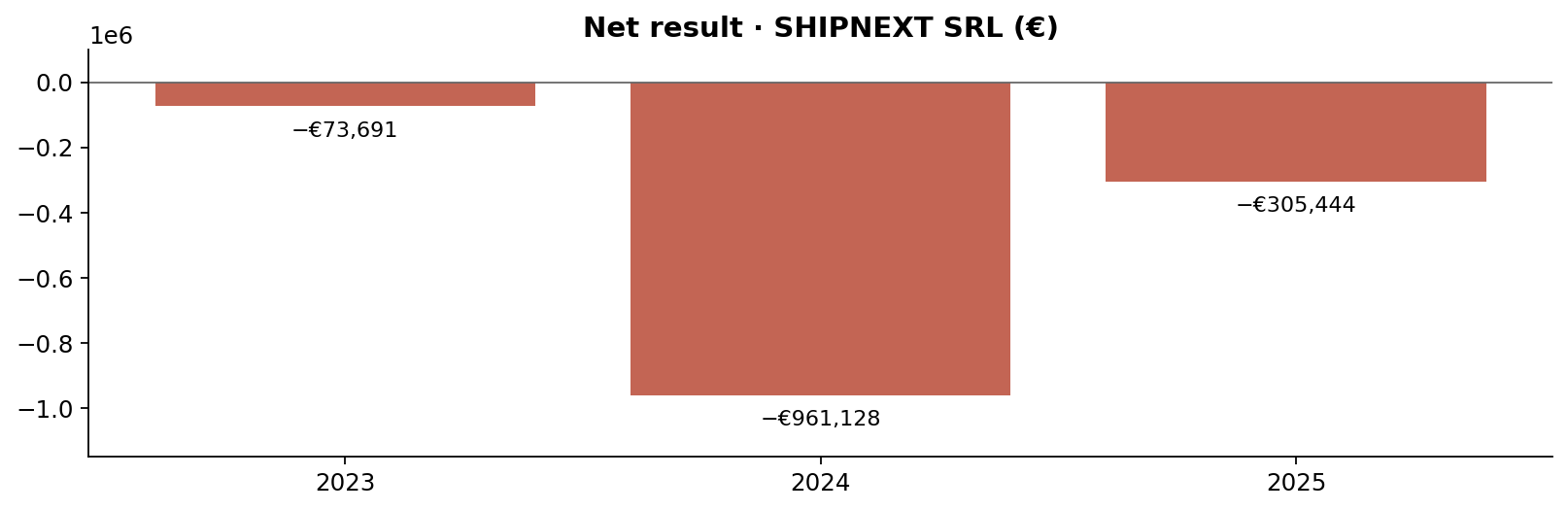
The filed figures sum to net losses of €1,340,263 for 2023–2025. This is the sum of three years’ accounting results—not a cash-burn figure, the loss of the entire international project, or a measure of outstanding debt.
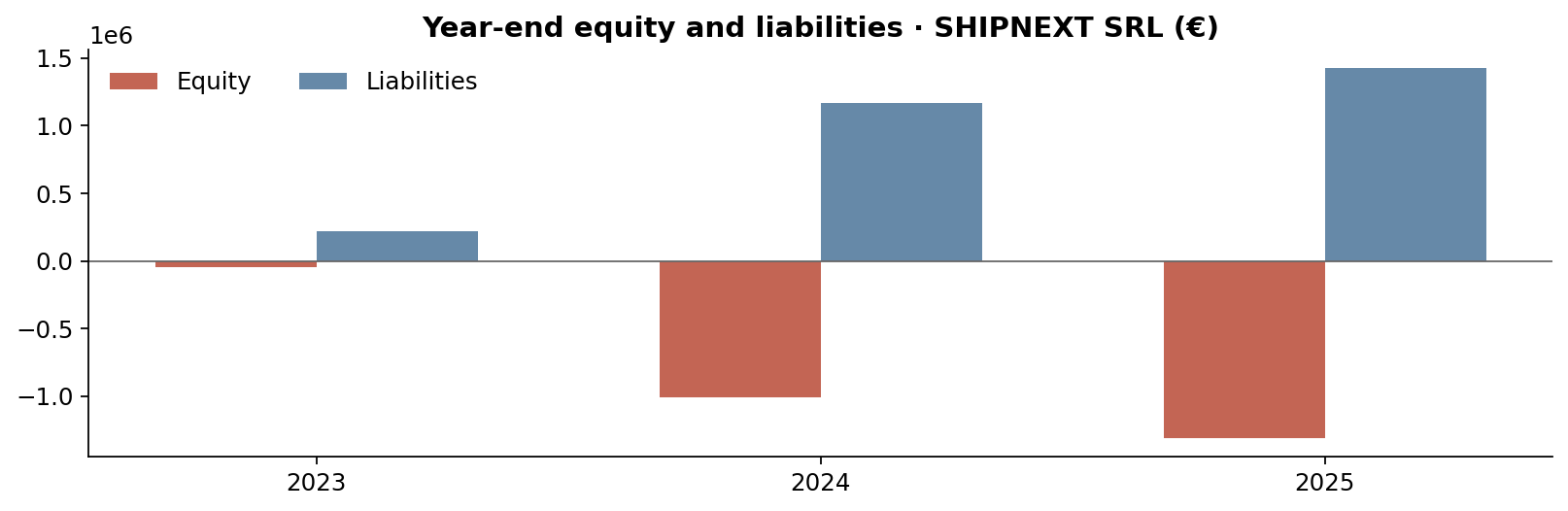
At 31 December 2025, total assets were €111,598 and liabilities €1,424,881, producing negative accounting equity of €1,313,283. Cash and cash equivalents under code 54/58 were €372, while current financial investments under code 50/53 amounted to €19,841. Cash should not be conflated with financial investments and other assets. Page 12 of the filing states a carried-forward loss of €1,340,262.56 and records management’s decision to retain going-concern accounting because it expects financial support from its director. This is a disclosed reliance on expected support, not a formal insolvency ruling or a verified guarantee of future funding. [1]
Negative equity means that recorded liabilities materially exceed recorded assets. It is not, in itself, a court declaration of insolvency or bankruptcy. The company remains registered as an active legal entity. [2]
3. Public claims: what they say—and what they establish
20,000 companies and thousands of active users
In an early-2026 LinkedIn post, SHIPNEXT said that more than 20,000 companies used the platform and that thousands of users were active every day. A different company post referred to more than 25,000 users. These are vendor-reported claims, not independently audited metrics. [4, 5]
The definition of a “company using the platform” is undisclosed. It could include a registered profile, exposure to data through an integration, free access, a one-off visit or a paying corporate subscription. Without definitions, paying-account figures and retention rates, 20,000 reported companies cannot be translated into commercial success.
130,000 cargo and freight requests per day
The same corporate post says the system processes more than 130,000 cargo and freight requests daily, as well as more than 100,000 vessel positions. If sustained every day, the former claim would equate to more than 47 million processed requests annually. [4]
A “processed request,” however, is not necessarily a unique live cargo, a direct mandate from a charterer, a commercial offer, a fixture or a paid transaction. In broker email circulation, the same cargo order can be repeated, forwarded and updated many times. Without disclosed deduplication rules, the number of distinct genuine cargoes cannot be determined; without fixture-conversion figures, the commercial effectiveness of matching cannot be assessed.
Patents, AI, awards and the “revolution” in chartering
References to patents, AI/NLP, automated matching and industry awards concern technology features or recognition. They are not evidence of profit, recurring revenue, paying customers or concluded fixtures. As early as 2017, Seatrade Maritime described the platform’s initial positioning as involving “bold claims.” [6]
Demonstrating technical superiority requires like-for-like tests using identical cargo enquiries, vessel positions, port restrictions and laycans, followed by verification of the resulting commercial offers. Similar features among competitors do not establish that SHIPNEXT is inferior; equally, the existence of those features does not in itself prove a unique competitive advantage.
How the audience claims have changed
| Period | Publicly reported figure | Qualification |
|---|---|---|
| 2019 | 1,000+ international companies | Industry interview repeating a company claim [7] |
| 2020 | 3,400+ clients in 102 countries | Interview clearly marked as sponsored [8] |
| 2023 | Approximately 3,200–3,500 users | Interview and industry reports [9, 10] |
| 2026 | 20,000+ companies; 25,000+ users | SHIPNEXT’s own claims; definitions undisclosed [4, 5] |
These numbers cannot be treated as a consistent time series: the sources variously discuss companies, clients, users and daily activity. A meaningful comparison would require harmonised definitions and underlying records.
4. App downloads: visible, but limited evidence
Google Play places the SHIPNEXT Android application in the 10,000+ download bracket. On 11 November 2026, Chrome-Stats displayed 11,677 estimated downloads, while AppBrain reported approximately 12,000 cumulative installs and around 390 installs during the previous 30 days (its page stated data updated 31 October 2026). These figures are independently modelled provider estimates, not certified first-party download totals, and should not be treated as identical measurement series. [11–13]
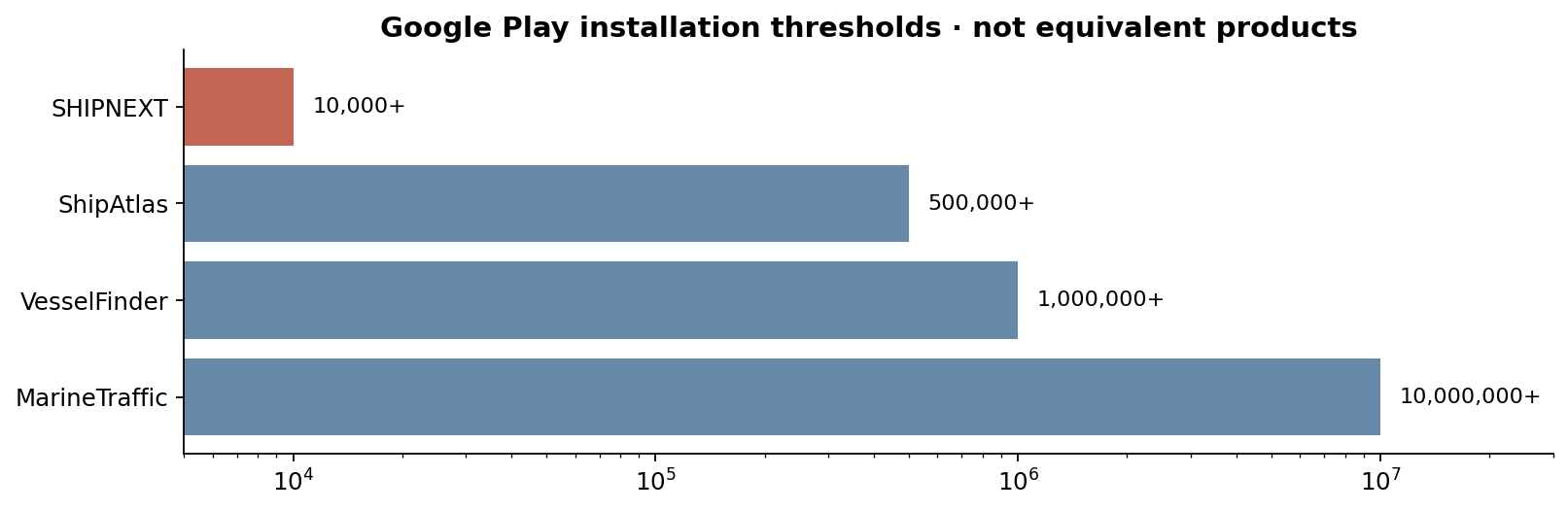
These data suggest a relatively modest mobile installation base, but cannot establish how many people use the web platform, how much SaaS revenue it earns or how many charterparties have been fixed. The scarcity of independent G2 reviews is a gap in third-party validation, not proof of poor product quality. [17]
5. Web traffic: visible scale, but not a measure of fixtures
According to Semrush modelling, shipnext.com recorded an estimated 114,530 visits in July, 95,700 in August and 135,370 in September 2026. The September estimate includes 3.37 pages per visit, average visit duration of 10:46 and a 69.23% bounce rate. These are third-party estimates rather than the company’s GA4 records. [18]
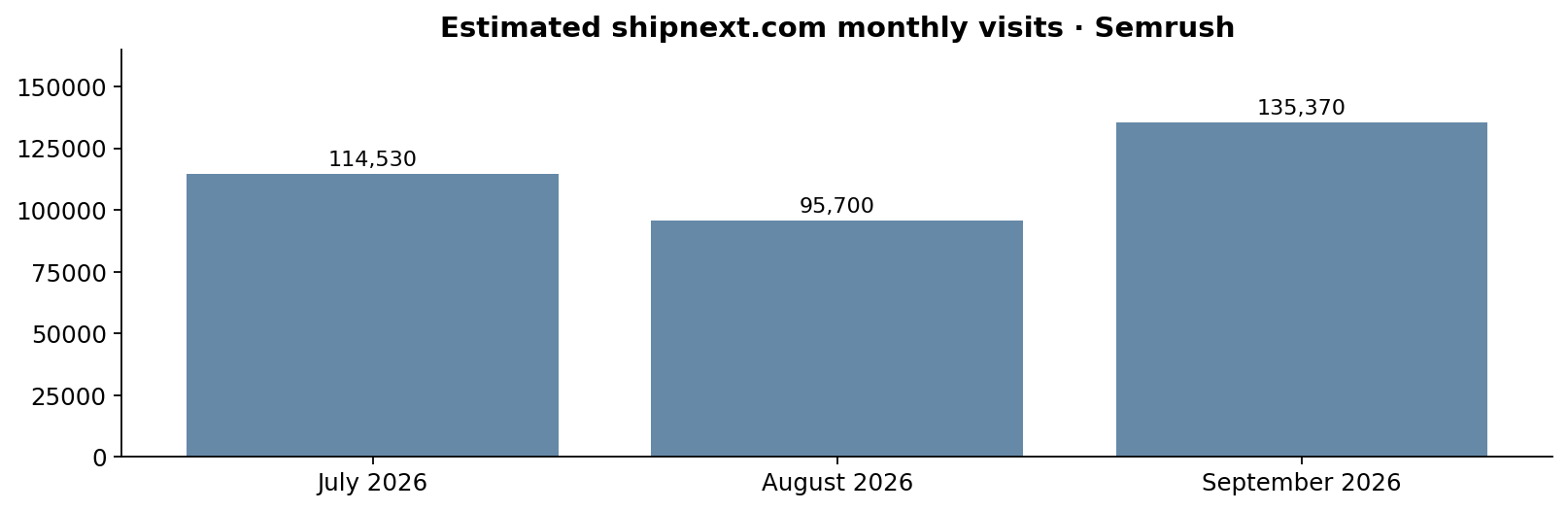
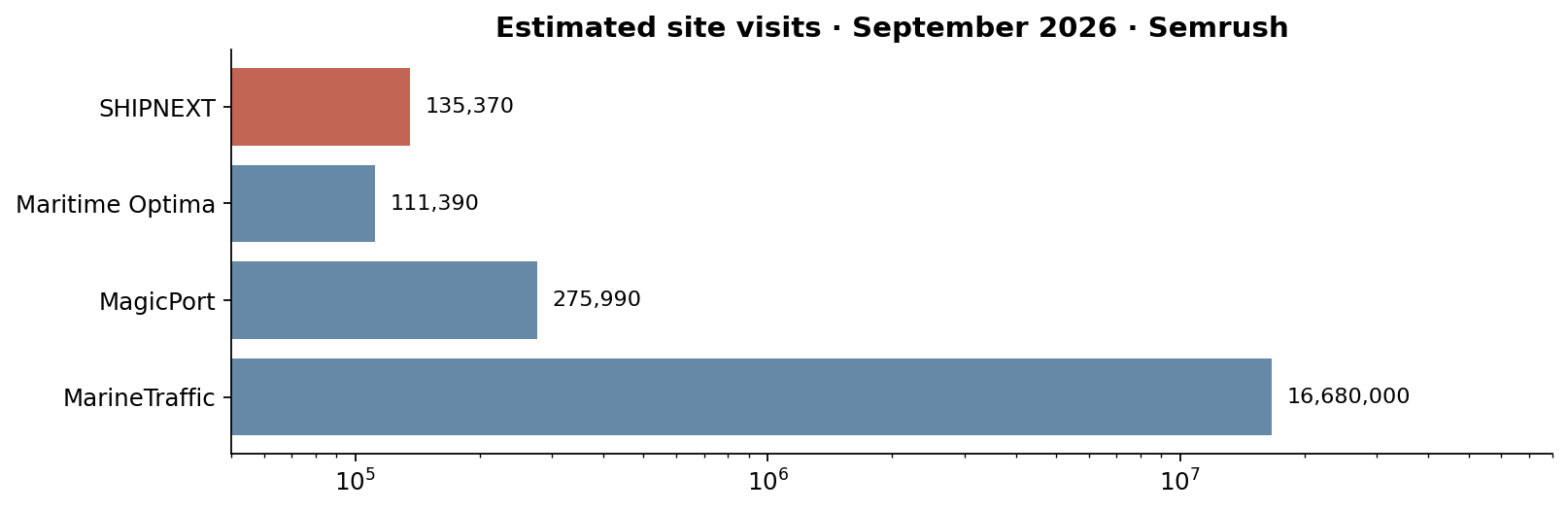
The existence of meaningful traffic contradicts assertions that the product has no users. However, visits may be driven by free vessel directories, port pages and route information. Even a lengthy session does not establish revenue.
6. Professional competitors
| Company / product | Public indicator | Relevant distinction |
|---|---|---|
| AXSMarine / AXSDry / AXSTanker | 18,000 users; 280m emails/year (vendor figures) | Professional chartering information and tools [20] |
| Shipfix / Veson | 1,000+ users and 70+ client firms as of Dec. 2023 | Broker email processing and pre-fixture workflows [21] |
| Signal Ocean | Broader analytics and management ecosystem | Data, chartering and commercial operations |
| Maritime Optima / ShipAtlas | 500,000+ Android installations | Mainly AIS and web audience; not a direct marketplace equivalent |
These vendor metrics are not normalised: AXSMarine may count individual users, Shipfix users within client organisations, and SHIPNEXT companies or registered accounts. They do not support a defensible league table of “best platforms.”
Competing products automate email processing, information extraction and cargo/tonnage intelligence. Claims that SHIPNEXT is revolutionary therefore require independent tests of matching quality, data coverage, integrations, the validity of enquiries and the resulting commercial outcomes.
7. Financial success: what the accounts establish and what remains unverified
Documented: the Belgian legal entity SHIPNEXT SRL reported net losses in 2023, 2024 and 2025, with negative equity at the end of 2025. The reviewed public sources do not substantiate an exact turnover figure, paying-customer count, ARR/MRR, total subscription sales or renewal rate. [1–3]
Not established: profitability of SHIPNEXT as a wider international group, recovery of invested capital, positive operating margins, profitability of the core SaaS business, or a substantial volume of completed fixtures through the marketplace. Lack of disclosed data does not prove zero sales.
In 2023, initial innovation support of €400,000 from VLAIO was announced. Such funding can support product development and reflects an assessment of development potential, but is not evidence of market profitability. Without notes to the primary accounts, it would be inappropriate to assert exactly when and where grant amounts were recognised. [22]
Important qualification: the Belgian accounts may not capture the income or expenses of other related companies or licensing entities. A conclusion about the entire group would require ownership information, intercompany agreements and consolidated accounts.
8. Five questions that promotional PR does not answer
- Of the reported 20,000+ companies, how many paid for access in 2025 and how many renewed in 2026?
- How many distinct, direct cargo enquiries originate from verified charterers, rather than forwarded broker correspondence?
- How many independently confirmed fixtures were concluded using SHIPNEXT in 2024–2026?
- What share of monthly active users pay for functionality, and what are ARR, MRR and customer retention?
- How does the publicly claimed scale of operations reconcile with the losses and negative equity reported by Belgian SHIPNEXT SRL?
Editorial conclusion
Behind SHIPNEXT’s eye-catching statistics stands a real software platform—but not necessarily a demonstrated commercial success. The company reports tens of thousands of users and companies and hundreds of thousands of data items processed daily. Those metrics cannot substitute for revenue, net income, active paying subscriptions or concluded charter fixtures.
The available Belgian financial statements show that SHIPNEXT SRL incurred losses in three consecutive years and had negative equity exceeding €1.3 million at the end of 2025. On the verified evidence, the Belgian company cannot accurately be described as a demonstrated profitable or financially successful business.
The technological merit of SHIPNEXT is a separate question requiring comparative product testing. The 2025 accounts state that going-concern accounting was retained in reliance on expected financial support from the company’s director; this fact warrants scrutiny but must not be described as a bankruptcy finding. The better evidenced question today is not “Does the product exist?” but “Where are the verifiable commercial outcomes commensurate with the scale of its promotional claims?”
Sources and methodology
[1] SHIPNEXT SRL, filed annual accounts for 2025 (NBB-format primary document). https://www.rovalta.com/comptes/0745806967/2026-00447395.pdf
[2] SHIPNEXT SRL, filed annual accounts for 2023, primary document. https://www.rovalta.com/comptes/0745806967/2024-00297889.pdf; Rovalta multi-year summary: https://www.rovalta.com/de/company/0745806967/shipnext
[3] Jaarrekening.be, company registration and reported financial metrics. https://jaarrekening.be/en/be/SHIPNEXT/0745.806.967
[4] SHIPNEXT LinkedIn post: 20,000 companies / 130,000 requests. https://www.linkedin.com/posts/ship-next_weve-started-the-new-year-actively-in-the-activity-7415348645618995200-0vYH
[5] SHIPNEXT LinkedIn claim of 25,000 users. https://www.linkedin.com/posts/ship-next_besttools-shipping-activity-7452372273300373505-3v6R
[6] Seatrade Maritime, initial launch claims. https://www.seatrade-maritime.com/tankers/ukrainian-shipowner-launches-shipping-digital-marketplace-with-bold-claims
[7] Sudohodstvo, 2019 interview. https://sudohodstvo.org/aleksandr-varvarenko-gruzoperevozki-onlajn-eto-budushhee-mirovogo-sudohodstva/
[8] Sudohodstvo, 2020 interview marked as sponsored content. https://sudohodstvo.org/aleksandr-varvarenko-my-predlagaem-menyat-podhod-k-rabote-s-informatsiej/
[9] Splash247, 2023 interview. https://splash247.com/shipnext-a-digital-replica-of-the-shipping-market/
[10] SWZ Maritime, 2023 report referring to approximately 3,500 daily users. https://swzmaritime.nl/news/2023/10/03/shipnext-wins-grant-to-boost-ai-in-shipping/
[11] Google Play — SHIPNEXT. https://play.google.com/store/apps/details?id=com.shipnext
[12] Chrome-Stats, estimated downloads, data ingested 11 November 2026. https://chrome-stats.com/d/com.shipnext
[13] AppBrain, statistics shown 11 November 2026 (page updated 31 October 2026). https://www.appbrain.com/app/shipnext/com.shipnext
[14] Google Play — ShipAtlas. https://play.google.com/store/apps/details?id=com.maritimeoptima.production
[15] Google Play — VesselFinder. https://play.google.com/store/apps/details?id=com.astrapaging.vff
[16] Google Play — MarineTraffic. https://play.google.com/store/apps/details?id=com.marinetraffic.android
[17] G2 — SHIPNEXT review listing. https://www.g2.com/products/shipnext-shipnext/reviews
[18] Semrush, shipnext.com, September 2026. https://www.semrush.com/website/shipnext.com/overview/?source=trending-websites
[19] Semrush, maritimeoptima.com, September 2026. https://www.semrush.com/website/maritimeoptima.com/overview/?source=trending-websites
[20] AXSMarine, vendor-reported users and emails processed. https://public.axsmarine.com/
[21] Veson Nautical, Shipfix acquisition, 14 December 2023. https://veson.com/news/veson-nautical-acquires-shipfix/
[22] SWZ Maritime, report on the VLAIO grant. https://swzmaritime.nl/news/2023/10/03/shipnext-wins-grant-to-boost-ai-in-shipping/
[23] Splash247, October 2026, professional network and undisclosed transactions. https://splash247.com/shipnext-takes-aim-at-shippings-email-habit/
[24] Semrush, magicport.ai, September 2026. https://www.semrush.com/website/magicport.ai/overview/
[25] Semrush, marinetraffic.com, September 2026. https://www.semrush.com/website/marinetraffic.com/overview/
Methodology: financial data relate to one specifically identified Belgian legal entity; mobile store figures concern individual applications; Semrush data are modelled estimates; and vendor PR is not treated as independent validation. Unverified market rumours about the platform’s quality are not presented as established facts. The 2025 accounts are legally filed financial statements, but the filing itself does not establish that the figures received an independent statutory audit; see page 3 of the filing. This investigation independently cross-checked published documents but did not perform an audit.
Legal Disclaimer
This investigation has been prepared using publicly available information, including official financial statements, corporate disclosures, published company statements, industry publications, and independent analytical sources.
The financial information presented in this investigation relates specifically to the Belgian legal entity SHIPNEXT SRL, unless expressly stated otherwise. These figures should not be interpreted as the consolidated financial results of the entire international SHIPNEXT business.
Statements concerning SHIPNEXT's user numbers, commercial activity, and technological achievements are identified as company claims where independent verification is unavailable. Third-party estimates are presented with reference to their respective sources, reporting periods, and methodological limitations.
The investigation distinguishes documented facts, statements made by the parties involved, and the author's analytical conclusions and opinions. References to commercial disputes do not imply that liability or wrongdoing has been judicially established unless expressly supported by a relevant court decision.
The purpose of this publication is to examine SHIPNEXT's publicly reported financial performance, commercial transparency, promotional claims, and competitive position within the international maritime industry.
The author welcomes documented corrections, clarifications, and responses from the individuals and companies mentioned in this investigation. Any material factual inaccuracies brought to the author's attention will be reviewed and, where appropriate, corrected.
This publication constitutes professional commentary and analysis on matters of legitimate commercial and industry interest, within the framework of freedom of expression and applicable law.