· Category: Alexander Varvarenko, Varamar Shipping, SHIPNEXT
Alexander Varvarenko, Varamar Shipping, SHIPNEXT: When More Market Participants Start Asking About Payment
Alexander Varvarenko, Varamar Shipping, SHIPNEXT: an unpaid bunker invoice, possible creditor disputes and open questions about the “new Varamar fleet”.
A few days ago, I once again had the “pleasure” of communicating with Hanna Varvarenko on LinkedIn.
Yes, the same Hanna who, a few months ago, came to me in private messages asking that I stop publicly discussing the situation surrounding Varamar and warning me about my social media activity.
This time, however, the exchange took place publicly — directly under a VARAMAR LinkedIn post.
Hanna wrote:
“Now I understand the tone you have chosen. I spoke to you respectfully and simply asked that this matter be resolved outside social media. Calling that a ‘threat’ and now directing the same accusations at me personally is unfortunate. We made a conscious decision not to block you and to give you the opportunity to express yourself openly.”
The last sentence deserves particular attention:
“We made a conscious decision not to block you…”
In this context, I understand this as a reference to the possibility of blocking me from the VARAMAR LinkedIn page, where the page administrators control comments and user access.
That raises a different question:
Who exactly is “we”?
Hanna Varvarenko publicly describes a decision concerning the official VARAMAR page as something in which she participates:
“We made a conscious decision…”
Earlier in the same discussion she also wrote:
“Our legal team will see this through.”
Again — our.
This does not sound like someone who is merely an outside observer commenting under her husband’s company page.
Then came the bunker-invoice comment
Against this background, another comment deserves attention.
Martin van Wanrooij wrote very briefly:
“or pay bunker invoice”
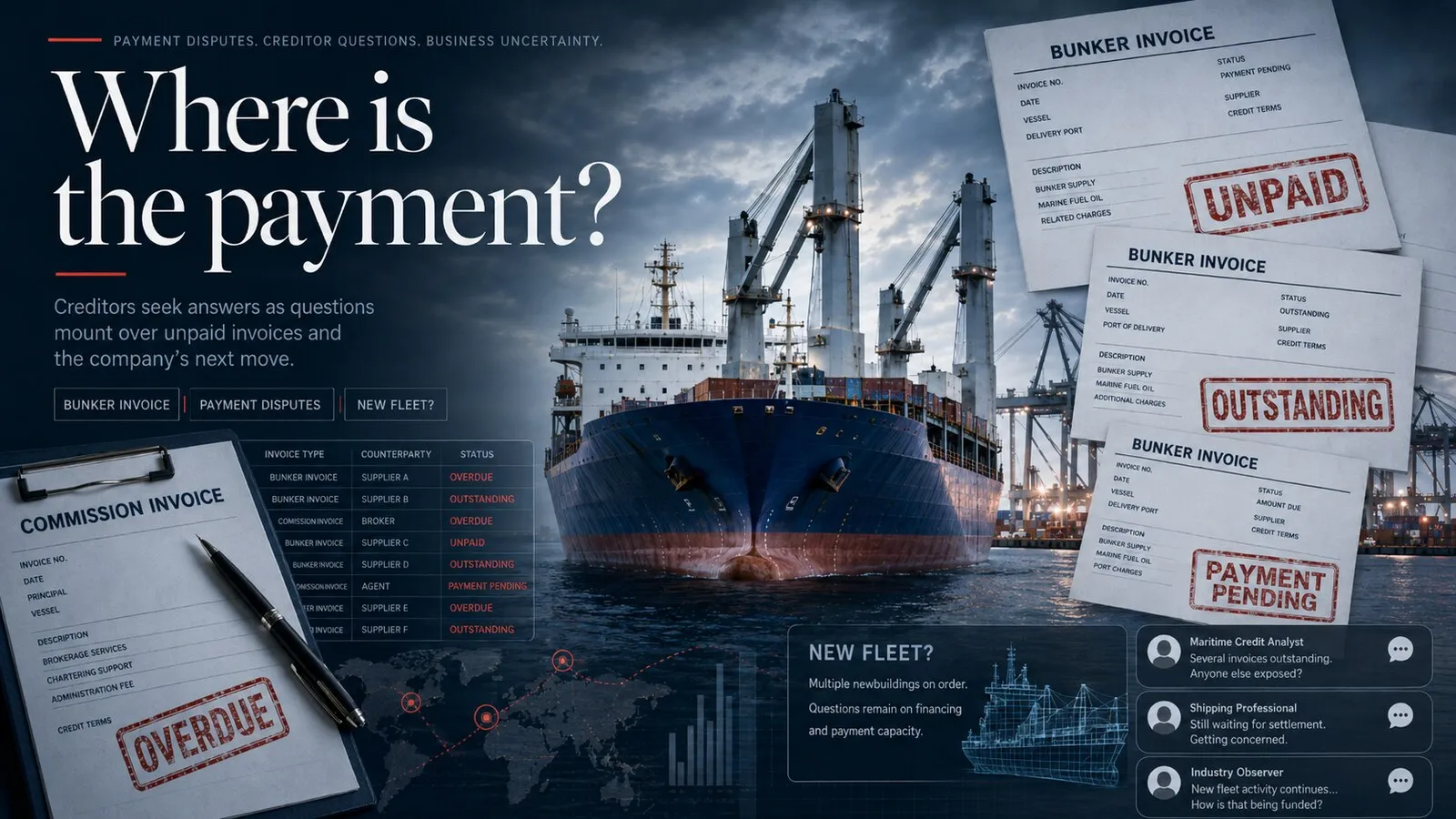
Behind that short sentence is a concrete commercial issue: an unpaid bunker invoice for a very substantial amount.
I am deliberately not publishing the amount or additional details at this stage.
The significance of Martin’s comment is not only the invoice itself.
It is also the fact that another participant in the shipping market raised a payment issue directly in a public discussion involving Hanna Varvarenko.
And this is not the first time that something similar has happened.
Previously, a Turkish colleague also addressed Hanna publicly through LinkedIn in connection with his dispute involving Alexander Varvarenko / Varamar. According to his account, payment remained outstanding even after arbitration had been concluded in his favour.
Now another market participant raises the issue of a bunker invoice.
And then there is my own case:
- an unpaid brokerage commission;
- Alexander Varvarenko’s personal WhatsApp “fine”;
- and a demand for “repentance” instead of an ordinary commercial settlement.
There may be more
Separately from the bunker-invoice matter, I have received information from other participants in the shipping market concerning possible additional disputes and unpaid obligations involving Varamar and its creditors.
I stress that this information is not yet fully verified.
For that reason, I am deliberately not publishing the names of additional companies, amounts or circumstances until the verification process is complete.
But if this information is confirmed, the situation may no longer be viewed as several unrelated commercial disputes.
It may raise a broader question about Varamar’s relationships with counterparties and creditors and about the company’s payment discipline.
And what about the “new Varamar fleet”?
This makes another subject particularly interesting.
Varamar has recently been associated in public reports with the acquisition of its own fleet, with different publications referring to figures ranging from four to twelve vessels.
This naturally raises questions not only for Varamar, but also for the media and industry publications that distributed these reports:
- How many vessels were actually acquired?
- Which vessels?
- Which legal entities acquired them?
- Are those vessels actually owned by Varamar Group?
- Or does the word “acquired” describe another form of commercial control, operation or management?
When reports concerning substantial unpaid commercial obligations appear at the same time as announcements of a major fleet acquisition, verification becomes a legitimate professional exercise.
But that is another story.
I have taken responsibility for contacting the media and industry publications that reported on the new Varamar fleet.
I intend to verify the original sources behind those publications and the factual basis for the claims concerning the acquisition of vessels.
Once that verification is completed, I will separately inform colleagues in the shipping market about what can actually be confirmed regarding the “new Varamar fleet” — and what cannot.
The broader question
For now, the picture is becoming increasingly interesting.
A Turkish colleague addresses Hanna after a dispute and completed arbitration.
Martin publicly raises the issue of an unpaid bunker invoice for a very substantial amount.
I continue to pursue payment of my brokerage commission.
Other market participants have informed me about possible additional disputes involving Varamar and creditors, and that information is now being verified.
At the same time, Hanna Varvarenko publicly writes:
“Our legal team…”
and
“We made a conscious decision not to block you…”
So the question of her actual role in Varamar’s affairs, public communications and dispute management becomes increasingly relevant.
When several independent market participants, arising from different commercial relationships, begin asking essentially the same question — Where is the payment? — this is no longer simply a question about one dispute.
It becomes a question about commercial practice.
Language versions: Українська версія · Русская версия