· Category: Alexander Varvarenko, Varamar Shipping, SHIPNEXT
Alexander Varvarenko, Varamar Shipping DMCC: When Commercial Power Turns into Pressure on a Broker
The broker involved in the BOHWA AMOY voyage performed the work, the freight and additional compensation were received — yet the earned brokerage commission remains unpaid.
Kiev Shipping Ltd on why turning commercial strength into pressure against a broker is dangerous for the entire market.
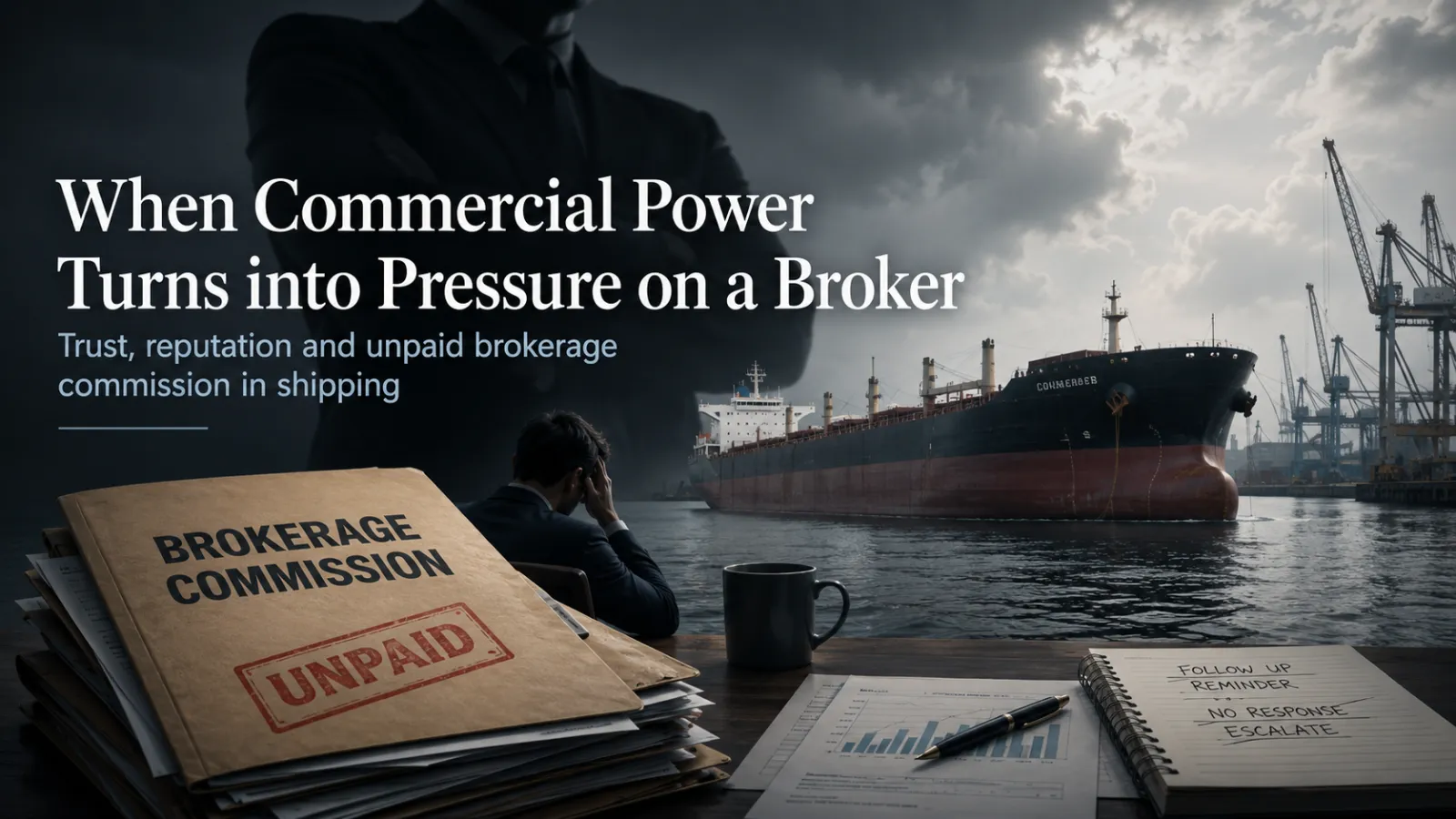
In shipping, many things depend not only on contracts, but also on trust. A broker brings cargo, assists in arranging the fixture, supports negotiations, participates in the commercial work and helps bring the voyage to a result.
After that, the market expects one simple thing: if the work has been performed, the freight has been received and the commercial result has been achieved, the earned brokerage commission must be paid.
This is not a matter of personal sympathy. This is not a matter of personal attitude. This is not a matter of bargaining power. This is ordinary commercial practice.
That is why the situation involving Varamar and Alexander Varvarenko raises more and more questions.
From the position of Kiev Shipping Ltd, the matter concerns an unpaid earned brokerage commission connected with the commercial work performed in relation to the voyage of the vessel BOHWA AMOY. The brokerage work was performed. The commercial result was achieved. Freight was received. Additional compensation was also received by Varamar.
After that, the matter should have been closed in the normal way: the earned brokerage commission should have been paid.
The work was done. The money was received. The commission had to be paid.
There was no complex commercial disagreement over the right to the commission. There was no real subject for such a disagreement. After receipt of freight and additional compensation, the obligation to pay the earned brokerage commission was an obvious commercial obligation.
But instead of payment, the situation was moved into a completely different direction. The broker did not face normal performance of a commercial obligation. Instead, the broker faced refusal to pay, pressure, accusations, threats and an attempt to shift the focus away from the unpaid commission and onto the broker who had started asking public questions.
This is an important point. When a broker remains silent, he can be ignored. When a broker asks about his commission, he can be accused. When a broker makes the matter public, he can be threatened with a reputational damages claim.
But this logic is dangerous for the entire market. If a major participant in the shipping market can receive a commercial result, accept the benefit of the broker’s work, receive freight and additional compensation, and then fail to pay the earned commission while attacking the broker personally, then any other broker may face the same situation tomorrow.
This is no longer only a private matter. This is a question of professional safety for brokers.
The shipping market works through a chain of trust. Shipowners, operators, charterers, traders, brokers and agents all depend on commercial obligations being performed without pressure, manipulation or attempts to transfer responsibility onto the weaker side.
A broker should not be afraid to ask about payment of an earned commission. A broker should not receive threats for publicly describing facts. A broker should not become the target of an attack simply because he demands performance of an ordinary commercial obligation.
What makes this situation especially telling is that it is not about an accidental technical delay. It is about a principle: whether a company may use its position, resources and legal pressure against the person who helped it obtain a commercial result.
The market’s answer to such situations should be clear. A strong company does not prove its strength by putting pressure on a broker. A strong company closes its commercial obligations. A strong company does not turn an earned brokerage commission into an instrument of pressure.
Alexander Varvarenko and Varamar may have their own public position. That is their right. But the market also has the right to see the facts, ask questions and assess the business conduct of market participants.
In international shipping, reputation matters. Reputation is built over years, but it is damaged when, instead of paying an earned commission, a company chooses silence, pressure, accusations and legal threats.
For Kiev Shipping Ltd, this matter remains a question of principle. Not only because it concerns one commission. But because it concerns how the market should treat a broker’s work after that work has already produced a commercial result.
If a brokerage commission has been earned, it must be paid. Everything else is no longer a matter of normal commercial practice. It becomes a question of trust, business reputation and the rules of conduct in international shipping.
Language versions: Українська версія · Русская версия