· Category: Alexander Varvarenko, Varamar Shipping, SHIPNEXT
Alexander Varvarenko, Varamar Shipping, SHIPNEXT: The Cost of Personal Power
The unpaid BOHWA AMOY brokerage commission dispute has developed into a broader question about Alexander Varvarenko, Varamar Shipping, SHIPNEXT, corporate decision-making and payment discipline.
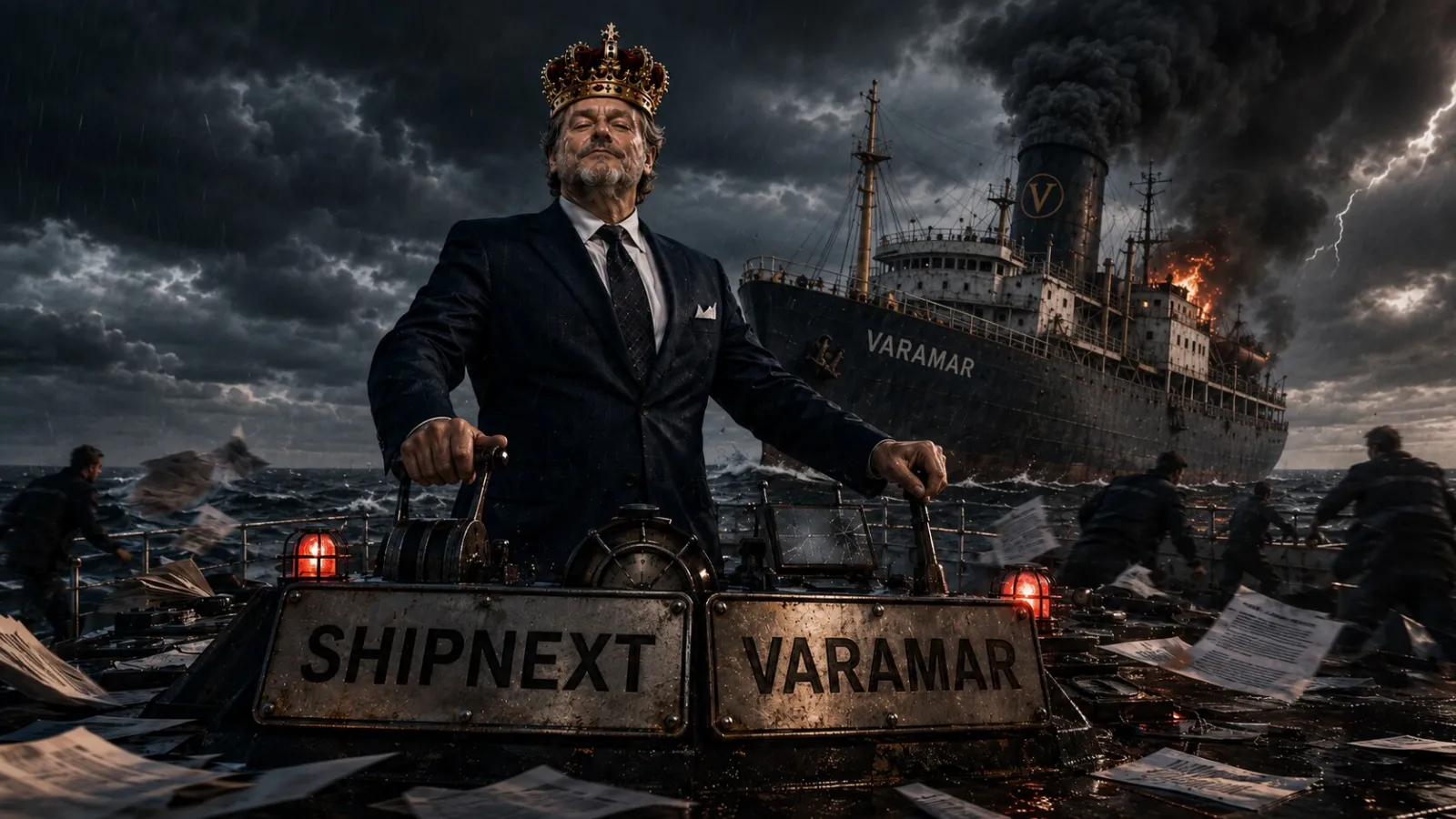
Alexander Varvarenko, Varamar Shipping, SHIPNEXT: the dispute surrounding the unpaid brokerage commission has gradually developed into a broader question about corporate decision-making, payment discipline and reputation.
The underlying commercial facts are straightforward. Brokerage work was performed in connection with the BOHWA AMOY project, an invoice was issued, payment was expected, and the commission remains outstanding.
For the consolidated factual record behind these issues, see the full chronology of the dispute.
The wider issue begins with what happened afterwards.
From a Payment Issue to a Personal Decision
For approximately one and a half months, communications concerned the timing of payment. There was no competing invoice and no uncertainty about who had performed the work or who had issued the invoice.
The situation changed when Alexander Varvarenko personally communicated through WhatsApp that a penalty equal to the entire outstanding brokerage commission had been imposed.
That decision transformed a payment delay into a broader commercial dispute.
I have not identified any provision in the relevant contractual framework authorising such a unilateral 100% penalty through a messenger communication.
The key question therefore remains simple:
Was the commission withheld pursuant to an agreed contractual mechanism, or because of a personal decision taken outside that mechanism?
Personal Authority vs. Commercial Resolution
Shipping companies regularly face disagreements with brokers, charterers, owners and other counterparties.
The professional response is normally to identify the contractual basis of the disagreement, quantify any legitimate counterclaim and resolve the issue through the agreed commercial or legal mechanism.
What makes this dispute unusual is the apparent substitution of that process with a personal decision concerning the entire commission.
When the commercial position of a company becomes inseparable from the personal position of its controlling executive, the consequences can extend beyond one invoice.
They affect counterparties’ perception of governance, predictability and payment discipline.
Varamar Shipping and Corporate Reputation
Varamar Shipping presents itself to the international market as an experienced shipping business operating across multiple jurisdictions.
For such a company, reputation is not built only through vessels, cargo volumes, conferences or expansion announcements.
It is also built through ordinary commercial relationships.
Brokers and counterparties evaluate companies according to a very practical standard: are agreed obligations handled through predictable contractual processes?
If a payment obligation can be replaced after the work is completed by a unilateral penalty that was not part of the original commercial arrangement, that question becomes relevant to the wider market.
SHIPNEXT and the Transparency Question
SHIPNEXT is publicly associated with digitalisation, transparency and technological efficiency in shipping.
That creates an additional reputational dimension.
The matter therefore becomes more than a payment dispute. It becomes a test of whether public claims about transparency and modern commercial practices are consistent with the decision-making standards applied in actual business relationships associated with the same leadership.
Technology can improve freight matching, documentation and communication.
But no digital platform can replace basic commercial principles: clear agreements, contractual certainty and payment discipline.
The Subsequent Legal Conflict
The dispute later developed into legal and reputational claims concerning my public statements about the unpaid commission.
Civil proceedings were initiated in Kyiv seeking substantial compensation for alleged reputational and moral damage.
On 14 July 2026, the Solomianskyi District Court of Kyiv closed the civil proceedings on jurisdictional grounds.
The court awarded no damages and made no finding that my publications were false.
The original commercial issue remained unresolved: the brokerage commission connected with the BOHWA AMOY transaction remained unpaid.
The Wider Market Question
This is why the issue should not be reduced to a private disagreement between two people.
The amount of an individual brokerage commission is not what matters to the shipping market. The principle does.
Independent brokers routinely invest time, contacts, expertise and commercial credibility before receiving payment. The system works because participants expect agreed commissions to be honoured according to the contractual framework.
When that expectation breaks down, the consequences extend beyond one fixture.
The issue is no longer simply why the commission remains unpaid.
The broader question is how much corporate reputation Varamar Shipping and SHIPNEXT should bear for defending a personal decision that has not been shown to arise from the contractual payment mechanism.
The longer the dispute continues, the more visible that distinction becomes.
Related reading:
Language versions: Українська версія · Русская версия
This publication presents the documented position of the author in an ongoing commercial dispute. References to other companies or individuals do not imply liability unless expressly stated.