· Category: Alexander Varvarenko, Varamar Shipping, SHIPNEXT
Alexander Varvarenko, Varamar Shipping, SHIPNEXT: Tsar, Baron Munchausen and King of Liars
Alexander Varvarenko described the unpaid brokerage commission dispute as the first situation of its nature in Varamar’s 17-year history. This article compares that statement with published sources, other reported payment disputes, the phantom fleet, the BOHWA AMOY commission dispute and Varamar’s continuing personnel changes.
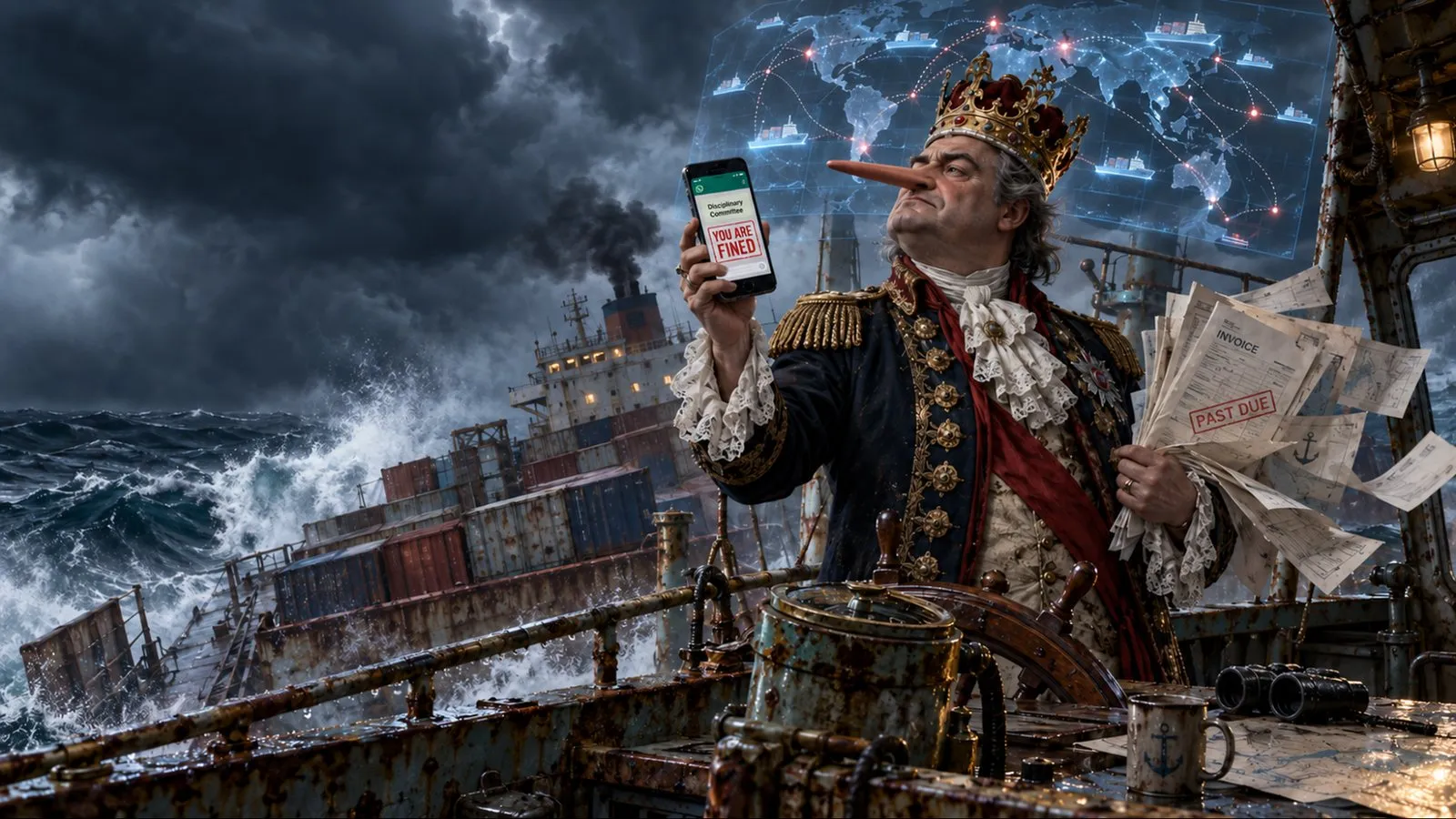
Payment disputes, the phantom fleet, an unpaid brokerage commission, a bunker invoice and Alexander Varvarenko’s public statements examined against published sources and documented events.
On 21 August 2026, Alexander Varvarenko published a statement on LinkedIn concerning the dispute over an unpaid brokerage commission.
He described the information being circulated as false and without factual basis, characterised the matter as an ordinary contractual or commercial disagreement, and claimed that Varamar supposedly had no obligation to pay the broker.
The following sentence was particularly notable:
“This is the first situation of this nature in Varamar’s 17-year history.”
In other words, Varvarenko publicly stated that this was the first case of its kind in Varamar’s entire 17-year history. Full text of Alexander Varvarenko’s statement dated 21 August 2026
Varvarenko himself did not explain what exactly he meant by “a situation of this nature”. However, his statement was made in the context of a dispute about whether an obligation existed to pay an earned brokerage commission. This article therefore considers that phrase specifically in the context of payment disputes and claims that no obligations are owed to counterparties.
I state publicly that the claim about the “first such case” contradicts the available facts and published primary sources.
This is not about my personal dislike of Varvarenko or his tone. It is about a specific public statement that must be compared with:
- the public demand for compliance with the arbitration award in the M/V KOZA matter;
- the public comment by a Bebeka representative about the need to pay a bunker invoice;
- the confirmed payment of only half of that invoice;
- information received from other market participants who claim that payments remain outstanding;
- Hanna Varvarenko’s words about previous “similar situations” and delays between clients and companies;
- the documented history of the unpaid earned brokerage commission relating to M/V BOHWA AMOY.
It is on the basis of these circumstances taken together that I consider Alexander Varvarenko’s statement about the “first such case” to be untrue.
Varamar’s Phantom Fleet: Four or Twelve?
The story of Varamar Shipping’s “new fleet” also deserves separate attention.
Industry media reports referred to four vessels that had allegedly been acquired, while in some reports the scale of the announced programme increased to as many as twelve.
However, finding a publicly verified list of these acquisitions proved far more difficult than reading the striking headlines.
This raises entirely ordinary questions for the shipping market:
- What are the names of the acquired vessels?
- What are their IMO numbers?
- Which legal entities are registered as their owners?
- When exactly did title pass?
- Which vessels have already been acquired, and which exist only as plans, options or future projects?
- In this context, does “acquired” mean a purchase, commercial management, chartering, an option or an agreement on future cooperation?
It appears that Alexander Varvarenko did not acquire ordinary vessels but exceptionally inconspicuous submarines. Everyone is looking for them, yet no one can confidently identify four of them, let alone twelve.
I am therefore announcing a professional maritime competition: anyone who manages to locate four or twelve submarines actually acquired by Alexander Varvarenko or Varamar Shipping is invited to contact me.
The winner will receive a special prize—after the vessel names, IMO numbers, registered owners and dates of transfer of title have been verified, of course.
For now, what we have is Varamar’s phantom fleet: it already exists in interviews and headlines but continues successfully to evade independent identification.
Read more: Alexander Varvarenko, Varamar Shipping, SHIPNEXT: Media, Reputation and the “Phantom Fleet”
The M/V KOZA Arbitration Award
One of the most revealing episodes concerns Gökhan Özcan, identified on LinkedIn as General Manager of the Turkish company TET International Dış Ticaret ve Kimya San. A.Ş.
In a public comment under a post by Alexander Varvarenko, Özcan wrote that years had passed but the arbitration award against Varamar relating to M/V KOZA had still not been honoured. According to Gökhan Özcan, the arbitrator appointed by Varvarenko himself ruled entirely against Varamar. Özcan then publicly asked Varvarenko a direct question: could Varamar finally be expected to pay the amount due under the arbitration award?
Primary sources:
Alexander Varvarenko’s post containing Gökhan Özcan’s comment concerning M/V KOZA
Hanna Varvarenko’s post containing the public demand for payment in the M/V KOZA matter
Gökhan Özcan’s LinkedIn profile
I am not publishing the arbitration award itself and do not claim to have personally reviewed the complete case file. I am accurately reporting the substance of Gökhan Özcan’s public statement.
This episode should therefore be treated as a public statement by a participant in the relevant events, not as my own conclusion about the substance of the arbitration.
Nevertheless, the existence of such a public demand seriously calls into question Varvarenko’s claim that the present payment dispute is the first such case in Varamar’s history.
If a market participant publicly reports an unfulfilled arbitration award against Varamar and Varvarenko later calls another dispute concerning an unpaid amount the “first case”, there is an obvious contradiction requiring a substantive explanation.
Bunker Invoice: Martin van Wanrooij’s Public Comment and Payment of Half the Amount
Another payment episode concerns Martin van Wanrooij, representing the Dutch Coöperatieve Aan- en Verkoopvereniging voor de Scheepvaart “Bebeka” U.A.
Under a Varamar post on LinkedIn, Martin left a short but perfectly clear comment:
“..... or pay bunker invoice”
Primary sources:
Varamar’s LinkedIn post under which Martin’s comment appeared
Martin van Wanrooij’s LinkedIn profile
On 4 September 2026, specific financial details of this episode were communicated directly to me. The total bunker invoice was approximately USD 142,000.
After my publications raised the issue of Varamar’s unpaid obligations, the creditor received 50% of the invoice—approximately USD 71,000.
Accordingly, when I received this information, the second half of the invoice—another approximately USD 71,000—remained outstanding.
I have received no information about any later payment of the remaining amount. I therefore do not claim that this balance remains unpaid as of the publication date of this article. At the same time, I have no information or documentary confirmation that the invoice has been paid in full.
Separately, several sources in the international bunker sector provided information concerning other invoices that may have remained unpaid for approximately ten months.
I do not know their current status, exact amounts, the circumstances of the relevant supplies or whether there may be commercial disputes. These reports therefore require independent documentary verification and are not presented in this article as established facts.
I am not publishing Bebeka’s private commercial documentation or presenting the information received as facts established by a court.
However, the public comment by a Bebeka representative, the known total amount of the invoice and the confirmed payment of only half of it are specific circumstances that cannot simply be ignored.
My publications help draw attention to Varamar’s payment problems. After they appeared, the creditor received at least half of the amount due—approximately USD 71,000. Publicity therefore produces results, even though in this case the confirmed result has so far been limited to partial payment.
A detailed article about this episode:
Commercial delays and disputes may arise in the operations of any shipping company. This particular episode, however, cannot be erased from Varamar’s public history.
A simple question arises: how does a USD 142,000 bunker invoice, half of which was still awaiting payment in early September 2026, fit with Alexander Varvarenko’s public statement about the “first such case”?
It does not.
Other Counterparties Continue to Remain Silent and Wait
After my public communications began, representatives of several other Varamar counterparties contacted me and described their own difficulties in obtaining payment.
They are not yet prepared to speak publicly and continue to hope that Varvarenko or Varamar will eventually pay them.
Because these people have not authorised disclosure of their names, company names, amounts or documents, I will not publish that information without their consent.
Nor do I present the messages received as facts established by a court or describe these people as creditors in the legal sense without examining supporting documents.
Nevertheless, the fact that different market participants independently approach me with reports of unpaid amounts is relevant when assessing Varvarenko’s categorical claim that this was supposedly the only case.
Hope dies last. Waiting and remaining silent is their choice.
Experience shows, however, that months of silence do not always help people receive their money. Publicity, by contrast, forces answers to uncomfortable questions and sometimes contributes to payment—at least partial payment, as occurred with Bebeka’s bunker invoice after my publications.
“An Attack on the Family”: Another Convenient Version of Events
In his statement, Varvarenko wrote that a commercial dispute supposedly provides no grounds for “attacking” his family. This wording is intended to create the impression that completely uninvolved family members were dragged against their will into someone else’s commercial conflict. The actual sequence of events was different.
I did not contact Hanna Varvarenko or invite her to participate in the dispute. She contacted me herself through LinkedIn.
On 21 April 2026, Hanna Varvarenko wrote:
“Good day, We kindly ask you to stop posting publicly on our page.”
Note the wording:
“our page”.
She later explained:
“I am not an employee of Varamar or Shipnext, but work with various projects as a marketing and PR advisor.”
She then wrote even more specifically:
“For my part, I help develop various projects, including Varamar and Shipnext. My field is exclusively marketing, PR and branding.”
This was therefore not a completely uninvolved family member. By Hanna Varvarenko’s own account, she helps develop Varamar and SHIPNEXT specifically in marketing, PR and branding.
Her communication concerned my public posts—matters directly related to corporate reputation and PR.
The connection between Hanna and Alexander Varvarenko and Bluemont also merits separate attention.
According to statements made to me by Hanna Varvarenko, Bluemont is a family company, while Varamar and SHIPNEXT are among the projects with which Bluemont works in marketing, PR and branding. Alexander Varvarenko’s own public materials also identify him as the founder of Bluemont Holding and link Varamar and SHIPNEXT to the corporate structure he created.
Hanna Varvarenko therefore entered this conflict not merely as the wife of the person named in the publications. She described her own activity as work with Varamar and SHIPNEXT in the very field concerned by her communications to me: corporate reputation, public communications, marketing and PR.
On 22 April 2026, Hanna Varvarenko sent another message:
“I am writing to warn you directly and in advance. This activity—a large number of messages sent to different accounts—is already being perceived as spam.”
She continued:
“Complaints about you are regularly being submitted to LinkedIn, and in such cases the platform introduces restrictions or completely blocks a profile fairly quickly. The risk of losing your account in the near future is now more than real.”
And:
“For our part, we have already passed the information to LinkedIn.”
This was followed by a recommendation:
“We recommend that you stop now and not waste your time.”
Every reader can decide independently whether a message about complaints and a “more than real” risk of losing one’s profile was a friendly request or a warning intended to make me stop publishing publicly.
One thing, however, cannot be claimed: that Hanna Varvarenko remained outside the dispute and was then unexpectedly subjected to an unprovoked “attack”.
She initiated contact. She referred to “our page”. She acknowledged her involvement in developing Varamar and SHIPNEXT. She used the words “for our part, we have already passed the information to LinkedIn”. She demanded an end to public activity and warned of the possible blocking of the account.
Hanna Varvarenko later continued this approach in public comments:
“Our legal team will see this through. I look forward to the day we can share the full story and put an end to the false and malicious claims you keep posting on our social media.”
She also wrote:
“Now I understand the tone you have chosen. I spoke to you respectfully and simply asked that this matter be resolved outside social media.”
She then stated:
“We made a conscious decision not to block you and to give you the opportunity to express yourself openly.”
The question arises again: who exactly is meant by “we”?
If Hanna Varvarenko acted solely as a family member unconnected with the companies, why did she speak of “our page”, “our legal team”, a collective decision not to block me and information passed to LinkedIn “for our part”?
There is, however, a more fundamental question: where is the logic in the Varvarenko family’s actions?
Alexander Varvarenko is the founder of Bluemont and beneficial owner of Varamar Shipping. Through his professional work, the broker helped bring approximately USD 400,000 into Varamar’s bank account. When the time came to pay the earned brokerage commission, Alexander Varvarenko personally intervened and, through WhatsApp, announced a “fine” equal to 100% of the commission.
His wife, Hanna Varvarenko, who is connected with the PR projects of Varamar and SHIPNEXT, then repeatedly contacted the same broker, demanded that he stop publishing, reported complaints being submitted to LinkedIn, warned of a risk that his account would be blocked, and later spoke publicly about “false and malicious claims” posted on Varamar’s social media.
The sequence of actions is illogical.
First, Varamar’s beneficial owner personally decides not to pay an earned brokerage commission and replaces commercial obligations with a unilaterally announced WhatsApp “fine”. His wife, who works on marketing, PR and branding for Varamar and SHIPNEXT projects, then accuses the broker of causing reputational harm by publicly discussing that non-payment.
Where is the logic?
If Hanna Varvarenko genuinely wanted to protect Varamar’s reputation, she should have worked first and foremost with Alexander Varvarenko—the person whose personal decision directly caused the public conflict.
Alexander Varvarenko himself was the problem Hanna Varvarenko needed to address so that the earned brokerage commission would be paid and the commercial conflict resolved.
That is exactly what I told her during our communication. I asked Hanna Varvarenko to use her influence and help achieve a normal commercial resolution: cancellation of the unilaterally announced “fine” and payment of the earned brokerage commission.
She categorically refused.
In such cases, a well-known saying comes to mind:
“Husband and wife are of one devil.”
In this context, this is not a statement about their private family life, but a figurative assessment of how coordinated their actions were in this specific commercial and public conflict: Alexander Varvarenko made the decision that led to the commission remaining unpaid, while Hanna Varvarenko, instead of helping remove the cause of the conflict, focused on attempts to stop public discussion of its consequences.
According to information I received from several maritime-market participants who have known the Varvarenko family much longer and better than I have, Hanna Varvarenko has substantial influence over Varamar’s internal and reputational matters.
I cannot independently confirm all the assessments received from market participants and therefore do not present them as established fact. However, this information is consistent with Hanna Varvarenko’s own correspondence, in which she used the phrases “our page”, “our legal team” and “for our part, we have already passed the information to LinkedIn”, and spoke of a collective decision not to block me.
Further questions arise from the public LinkedIn exchange between Hanna Varvarenko and a representative of a Turkish company who asked her to assist in obtaining money due under the arbitration award concerning M/V KOZA.
I do not claim that this exchange in itself proves Hanna Varvarenko’s responsibility for compliance with the arbitration award or that she had a legal obligation to make payment. It does show, however, that another market participant also considered it appropriate to approach Hanna Varvarenko specifically about an unresolved payment problem involving Varamar.
Hanna Varvarenko’s public comments later disappeared from Varamar’s page.
Without LinkedIn’s internal data, it is impossible to determine reliably who deleted them: Hanna Varvarenko, an administrator of Varamar’s page or the platform itself. I therefore do not attribute their removal to any particular person without evidence.
The contents of the comments and private correspondence have, however, been preserved.
Thus, when Alexander Varvarenko presents this story exclusively as an “attack on the family”, his version omits several fundamentally important circumstances.
Hanna Varvarenko contacted me herself. She spoke of “our page”, “our legal team” and actions taken “for our part”. She acknowledged her involvement in developing Varamar and SHIPNEXT in marketing, PR and branding. She demanded that I cease public activity, warned that my account might be blocked and refused to assist with payment of the earned brokerage commission.
It is therefore impossible to portray Hanna Varvarenko solely as a completely uninvolved family member who was accidentally affected by someone else’s commercial dispute.
Hanna Varvarenko’s Words Raise Further Questions About the “First Case” Version
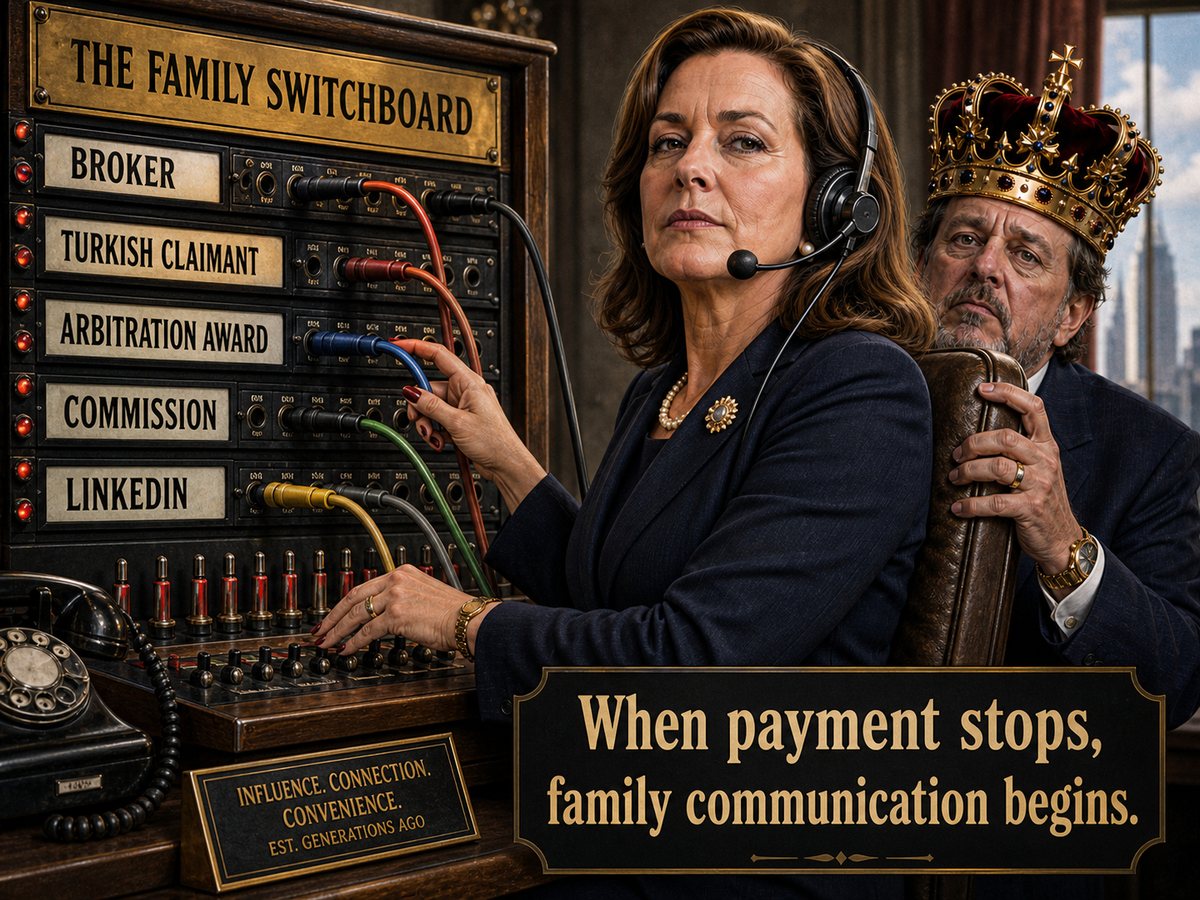
In private correspondence, Hanna Varvarenko made another notable statement:
“Over the years, many of our clients and partners have always treated similar situations with understanding when they arose, because this is part of life and we are all human.”
She later wrote:
“Even during serious crises—the global financial crisis of 2008–2009, the crisis of 2014 and the COVID-19 pandemic in 2020—as well as in situations where delays occurred between clients and different companies, no one allowed themselves to act as you are acting.”
I do not claim that these words in themselves prove the existence of specific Varamar debts or establish the circumstances of any individual payment dispute.
They do, however, expressly refer to previous “similar situations” and delays between clients and companies.
These are not my words. They were written by Varvarenko’s wife, who, by her own account, has been beside him for almost 20 years and helps develop Varamar and SHIPNEXT.
Against that background, Alexander Varvarenko’s later public statement that the current dispute was the first case of its kind in Varamar’s history raises further questions and requires an explanation.
Whose Family Was Actually Affected by This Conflict?
In an attempt to elicit sympathy from market participants, Alexander Varvarenko alleged that his family had been improperly drawn into a commercial dispute.
That account completely ignores the position of the broker’s family after Alexander Varvarenko first left the broker without his earned commission and then personally “fined” him through WhatsApp for the entire unpaid amount.
It is my family that has lived in Kyiv under Russian missiles and attack drones since 24 February 2022.
It is my wife who gave birth to a child on 14 June 2022 at Kiev Maternity Hospital No. 5. The maternity hospital was practically empty: because of the continuing war and threat of attacks, many pregnant women had been forced to leave Ukraine.
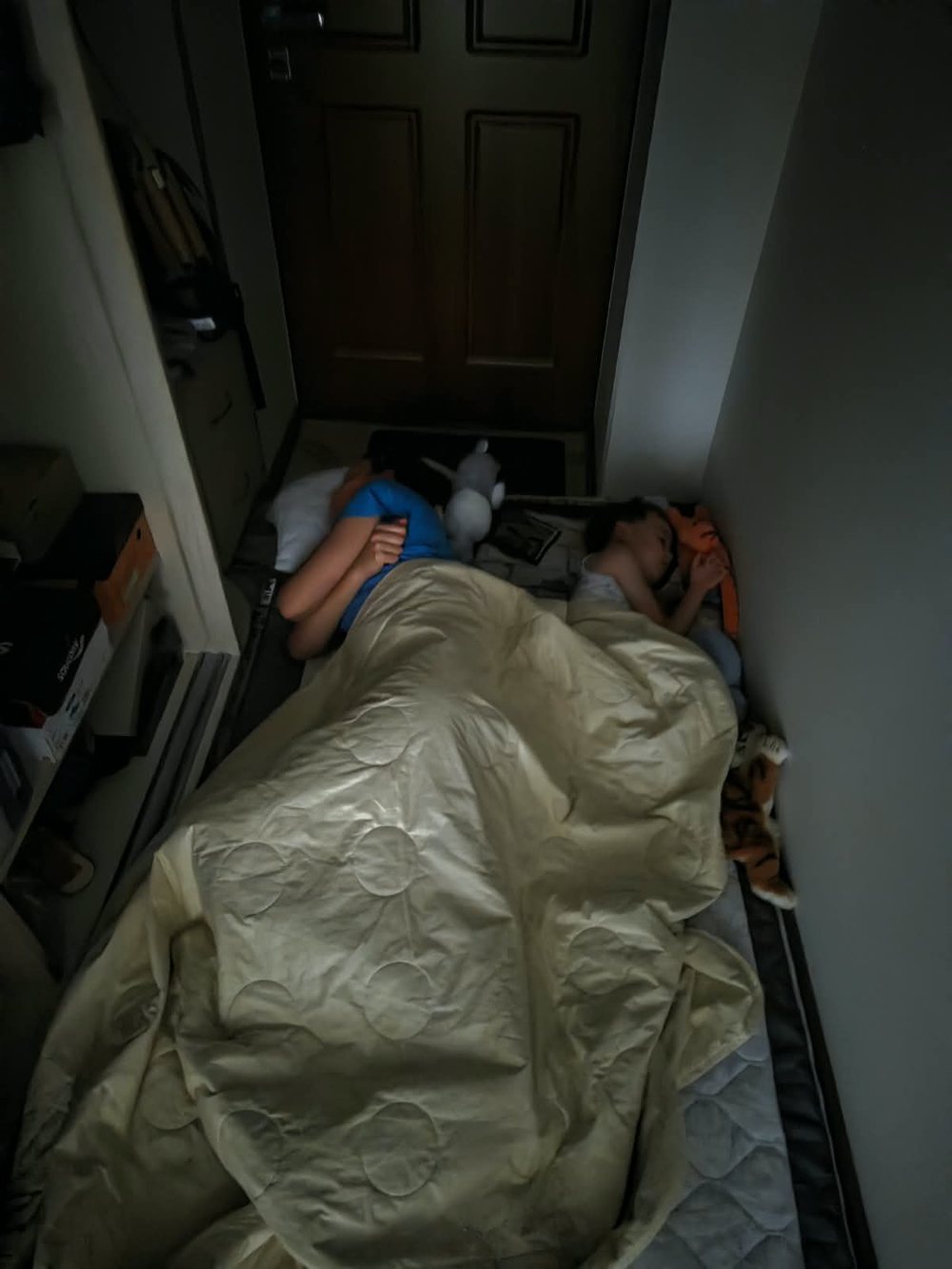
It is my family that sleeps on the corridor floor near the entrance door during air-raid alerts because this is the only place available to us that is separated from the street by two walls and may provide at least some protection from fragments during an explosion.
Under these conditions, I continued to work, performed my professional duties and took part in arranging an international sea shipment that resulted in Varamar receiving approximately USD 400,000 including additional compensation from the charterer.
After the work was completed, the earned brokerage commission was not paid. Instead of an ordinary commercial settlement, Alexander Varvarenko personally announced through WhatsApp a “fine” equal to the entire commission.
The attempt to portray only Alexander Varvarenko’s family as the injured party is therefore one-sided and manipulative.
The conflict affected above all the family of the broker who performed the work during a full-scale war, helped secure a substantial commercial result for Varamar and was left without his earned remuneration. This was followed by pressure, complaints, a police report and a civil claim of approximately USD 100,000 against him.
When Hanna Varvarenko once again began telling me what I should do and how I was required to protect my commercial interests, I politely asked her not to interfere where she had not been invited and to focus on her own family projects, chocolate business and family.
In my view, that response was entirely justified.
Hanna Varvarenko became part of this story not because I decided to involve an uninvolved family member. She contacted me herself, spoke of “our page”, “our legal team” and actions taken “for our part”, and threatened complaints and the possible blocking of my LinkedIn profile.
The cause of the conflict was not my family or the publications. It lay in actions by Alexander Varvarenko that I consider wrongful: his personal intervention in the payment issue, the unilateral WhatsApp “fine” and the subsequent refusal to acknowledge the obligation to pay the earned brokerage commission.
If Hanna Varvarenko genuinely wanted to end the conflict and protect Varamar’s reputation, she should have approached her own husband first and persuaded him to cancel the unilaterally announced “fine” and pay the broker’s earned commission.
That is exactly what I asked her to do.
She categorically refused.
The discussion of family therefore cannot be one-sided. A person cannot publicly invoke his own family while completely ignoring the consequences of his decisions for the family of someone who lives and works in wartime Kyiv and whose earned professional remuneration remains unpaid.
This dispute became personal not because the broker wanted to intrude into someone else’s private life. It became personal after Alexander Varvarenko himself turned an ordinary commercial obligation into a personal WhatsApp “fine” and then extended the consequences of his decision to the broker’s professional reputation, safety and family welfare.
Read more:
Alexander Varvarenko, Varamar Shipping, SHIPNEXT: The Varvarenko Show Goes Toward Hollywood
Video: why this dispute became personal for a Ukrainian broker
The Role of a “Wedding General”
Separate attention should be paid to Alexander Varvarenko’s position in the court documents relating to the claim of approximately USD 100,000 filed against the broker Konstantin Kalnyi. The position set out in those documents effectively amounted to saying that Varvarenko supposedly did not participate in Varamar’s operational activities and was limited to formal control.
This resembles the role of a “wedding general”: he is present, holds status and receives congratulations, yet supposedly knows nothing about what is happening around him or why.
Alexander Varvarenko is the beneficial owner of Varamar Shipping.
The company’s day-to-day activities may indeed be conducted through managers. They communicate with brokers, agents, bunker companies and other counterparties. The name Varvarenko may not appear in every operational exchange.
Likewise, Alexander Varvarenko did not formally participate in the daily organisation of the cargo shipment from India to Algeria aboard M/V BOHWA AMOY.
But that lasted only until it was time to pay the broker.
M/V BOHWA AMOY: Work Completed, Money Received, Commission Unpaid
As a result of my professional efforts, the M/V BOHWA AMOY shipment was successfully arranged and completed.
Varamar received the main freight and an additional voluntary payment of USD 50,000 from the charterer. The total amount received by Varamar from the project was approximately USD 400,000.
The earned brokerage commission, however, was not paid. The non-payment continued for several weeks. I sent Alexander Varvarenko two emails and waited for a response. None came.
I then circulated a short notice to the market:
VARAMAR DOESN’T PAY
And a miracle occurred. Approximately 20–30 minutes later, a Belgian citizen of Ukrainian origin with a familiar surname appeared on WhatsApp—Alexander Varvarenko.
The man who would later claim that he was not involved in Varamar’s operational activities intervened personally at the exact moment when the payment issue had to be resolved.
He imposed a “fine” on me equal to 100% of the unpaid commission.
Through WhatsApp.
The founders of English law probably turned in their graves.
A detailed chronology of the project and the ensuing dispute:
Alexander Varvarenko, Varamar Shipping and BOHWA AMOY: Timeline of the Commission Dispute
Alexander Varvarenko and Varamar: Brokerage Commission Dispute
Thanks from the Team. A Fine from the Tsar
The result is a remarkable management model:
- when managers perform the work and Varamar receives the money, Varvarenko supposedly has no involvement in operations;
- when it is time to pay the broker, Varvarenko personally appears on WhatsApp;
- when the broker publicly demands his earned commission, Varvarenko personally imposes a “fine” on him;
- when the dispute becomes public, Varvarenko personally demands repentance and goes to court and the police;
- after all this, he publicly states that nobody is obliged to pay the broker.
The Circus After the WhatsApp “Fine”
After the “fine”, a genuine circus began under Alexander Varvarenko’s direction.
I was required to repent publicly before Varamar Group. Payment of the earned brokerage commission was effectively made conditional on publishing a proposed letter in which I was to withdraw my statements, accept responsibility for the payment delay and apologise for alleged reputational harm to Varamar.
According to the correspondence in my possession, Alexander Varvarenko proposed the following text for publication: “With this letter, I would like to formally withdraw my previous statements and accusations directed at Varamar Shipping DMCC and the Varamar Group in general. Upon further review, I acknowledge that my earlier communication was made prematurely and without full consideration of the relevant facts. The delay in the settlement of my commission was not due to any unwillingness or failure on the part of Varamar, but rather resulted from my own late submission of the invoice, which was sent only shortly before my circular and contained certain inaccuracies requiring clarification.
I regret that I did not allow sufficient time for the matter to be properly reviewed and resolved through direct communication. It was not appropriate to escalate the issue publicly under these circumstances. I recognize that my previous circular may have caused reputational harm to Varamar, and I sincerely apologize for any confusion or concern it may have created among market participants. I would like to confirm that I have no grounds to question Varamar’s professional conduct or payment practices, and I withdraw any implication to the contrary. I remain committed to maintaining professional standards in all communications and will ensure that any future matters are handled directly and responsibly.”
I did not write, approve, sign or publish this letter.
The proposed wording required me to acknowledge publicly a version of events that I considered untrue: that the payment delay was my fault, that Varamar bore no responsibility for the non-payment and that I had no grounds to question the company’s payment practices.
In other words, this was not merely a request to delete an emotional post or correct a specific factual error. I was required to abandon my public position entirely and publish an apology in terms favourable to Varamar.
The earned brokerage commission was therefore effectively used as leverage to obtain a public statement protecting Varamar’s reputation.
I refused.
A civil claim of approximately USD 100,000 was then filed against me as compensation for alleged moral and reputational harm.
Later, the Ukrainian police received a complaint alleging extortion by the broker whose commission had first remained unpaid, who had then been given a 100% “fine” through WhatsApp and who had refused to publish the proposed letter of repentance.
The Solomianskyi District Court of Kyiv closed the civil proceedings on jurisdictional grounds without considering the parties’ allegations on the merits.
The court made no finding that my publications were false, awarded no compensation to Alexander Varvarenko or Varamar, and did not order me to remove them.
Article about the closure of the proceedings:
Alexander Varvarenko, Varamar Shipping DMCC: Court Case Closed, Commission Unpaid
Factual response to Varvarenko’s public statement:
After several months of this documented history, Varvarenko publicly declares that no obligation to pay the broker exists. Draw your own conclusions.
Varamar Was Repeatedly Asked to Explain the Legal Basis for Non-Payment
In order to establish Varamar’s official position, I repeatedly sent written requests directly to Alexander Varvarenko, the director of VARAMAR SHIPPING FZCO in the UAE, and Alisa Fomicheva, who represents Varvarenko’s interests.
In those letters, I did not simply demand payment of the earned brokerage commission. I asked the company to explain clearly and specifically the contractual or legal basis on which Varamar considers itself entitled not to pay the broker’s commission arising from the M/V BOHWA AMOY transaction.
In particular, Varamar was asked to identify:
- the contractual provision under which it considers the brokerage commission not payable;
- the legal rule or principle on which the company relies;
- whether Varamar denies that the brokerage commission became due at all, or accepts that it became due but considers itself entitled to withhold payment;
- whether the refusal to pay is based on Alexander Varvarenko’s previously communicated position concerning alleged reputational damage;
- whether a separate formal corporate decision not to pay existed, and, if so, who made that decision and when.
The need for these explanations became even more evident after Alexander Varvarenko stated publicly on LinkedIn that there were allegedly no lawful grounds requiring Varamar to pay the broker.
If a company publicly asserts that no legal grounds for payment exist, it is reasonable to expect it to identify the specific contractual provision or legal rule supporting that position. That is precisely what I repeatedly asked Varamar to do.
However, no substantive response explaining the contractual or legal basis for non-payment was received.
Only once, during a separate exchange, Alexander Varvarenko stated that he intended to pursue me everywhere and obtain compensation from me for the damage that I had allegedly caused to him and Varamar. That statement did not explain the contractual basis for refusing to pay the brokerage commission. It merely shifted the original commercial question towards alleged reputational damage and the subsequent pursuit of the broker.
A separate publication examines that communication and the contradiction between Varvarenko’s public image as a business mentor and his conduct in this real commercial dispute: Alexander Varvarenko, Varamar Shipping DMCC: When a Self-Styled Mentor Fails the Simplest Test!
Therefore, instead of answering why Varamar had not paid the earned brokerage commission, Alexander Varvarenko stated that he intended to pursue the broker and seek compensation from him. An allegation of reputational damage does not answer any of the contractual questions raised and does not, by itself, create a legal basis for withholding the commission.
This raises further questions because Alexander Varvarenko publicly positions himself as a business mentor and expert who teaches other entrepreneurs how to build and conduct business properly. His own real commercial case should therefore reflect the principles of transparency, accountability and proper performance of obligations that he promotes to others.
Yet this case reveals another discrepancy between his public expert statements and his conduct in practice. A person who teaches others how business should be conducted has not provided the broker with a clear contractual or legal explanation of why the earned commission remains unpaid. Instead of a specific answer, there have been statements that no lawful grounds for payment exist, allegations of reputational damage, threats to pursue the broker and demands for compensation.
The position therefore appears contradictory. Alexander Varvarenko publicly claims that there are allegedly no lawful grounds for payment. At the same time, despite repeated written requests, neither Varamar nor those representing its interests have identified any specific contractual provision or legal rule releasing the company from its obligation to pay the earned brokerage commission.
The recipients’ silence does not, by itself, constitute a legal admission of liability and cannot replace a judgment or arbitral award. It nevertheless leaves the central question unanswered: if Varamar genuinely has a lawful basis for non-payment, why has that basis still not been formulated and communicated to the broker in writing?
A further question naturally follows: how persuasive are public lessons about proper business conduct when, in his own commercial dispute, the mentor cannot or will not provide a direct and legally reasoned answer to a basic question about non-payment?
The Appeal: Court Hearings That, According to Varvarenko’s Version, “Never Took Place”
On 13 July 2026, I personally attended the Solomianskyi District Court of Kyiv for the scheduled hearing in the claim brought by Alexander Varvarenko and Varamar. Neither Varvarenko himself, nor a representative of Varamar, nor the lawyer who filed the claim appeared in court.
This information was published on the same day: Alexander Varvarenko Reputation: USD 100,000 Claim, but No Claimants in Court
On 14 July 2026, the Solomianskyi District Court of Kyiv closed the proceedings in case No. 760/11449/26, finding that the dispute fell within the jurisdiction of Ukraine’s Commercial Courts.
Information about the court’s procedural decision was also published on the same day: Alexander Varvarenko, Varamar Shipping DMCC: First Court Attempt Ends with Proceedings Closed
The information concerning my presence in court, the absence of the claimant side on 13 July and the closure of the proceedings on 14 July was therefore published on the dates when those events occurred — well before the appeal was filed.
Following the closure of the proceedings, Alexander Varvarenko, acting through lawyer Alisa Fomichova, filed an appeal.
The first page of the appeal identifies Alexander Varvarenko personally as the applicant and appellant. VARAMAR SHIPPING DMCC, whose current name is VARAMAR SHIPPING FZCO, remains listed as one of the claimants, but the company is not identified as the appellant. The appellant named in the document is Varvarenko personally.
The appeal alleges:
“The absence of an actual court hearing and a violation of the principle of publicity.”
It then states that the first-instance court’s finding that an open hearing took place on 14 July 2026:
“does not correspond to reality.”
According to the version presented in the appeal, the claimants’ lawyer remained outside the judge’s courtroom between 12:00 and 13:00, but no hearing was held, the parties were not invited into the courtroom, and the lawyer was allegedly merely handed the introductory and operative parts of an already prepared ruling closing the proceedings.
Another part of the appeal is entitled:
“Distortion by the first-instance court of information concerning the parties’ attendance and the absence of a hearing record.”
The appeal alleges that the judge “incorrectly” stated that the claimants’ representative failed to attend the hearing on 13 July 2026. It then makes the categorical assertion:
“No court hearings were held at all on either 13 or 14 July 2026.”
That version directly contradicts what I personally witnessed.
I attended the court on 13 July. Alexander Varvarenko, his lawyer and the representatives of Varamar did not appear.
On 14 July, a representative of Varvarenko’s side was present inside the courtroom and sat directly opposite me. The assertion that the parties were not invited into the courtroom and that no hearing took place therefore raises obvious questions.
This is not a disagreement about the interpretation of legislation. It concerns specific and verifiable facts: who attended the court, who entered the courtroom, whether a hearing took place and what procedural actions were performed.
These circumstances can be verified by examining the case file, information held by the court secretary, the court schedule, courthouse attendance records, any available technical recordings and other official records.
An appeal represents the position of one party. It does not, by itself, prove that the allegations contained within it are accurate.
A reasonable question therefore arises: if a representative of Varvarenko’s side was sitting directly opposite me in the courtroom on 14 July, on what basis does the appeal signed by his lawyer claim that no hearing took place and that the parties were never invited into the courtroom?
The manner in which the appeal describes the conduct of the first-instance court is also significant. The judge is accused of “distorting” information about the parties’ attendance, failing to conduct an actual hearing and issuing an already prepared ruling without following the required procedure. At the same time, the appellant’s own version must also be tested against the verifiable facts.
It is important to emphasise that the first-instance court made no finding that my publications were false or that Alexander Varvarenko or Varamar had suffered reputational damage, and it awarded them no compensation.
The proceedings were closed on procedural jurisdictional grounds. The appeal seeks to overturn that ruling and return the case to the first-instance court for further consideration. It does not establish that Varvarenko’s substantive allegations are true.
This episode is particularly relevant to the subject of this article. When public statements, procedural documents and directly observed events present different versions of the same story, the reader is entitled to ask which version can withstand verification against the documents and facts.
It is precisely such repeated discrepancies between Alexander Varvarenko’s categorical statements and verifiable circumstances that explain the title of this article.
Public Image and the Reality of a Commercial Case
Alexander Varvarenko publicly positions himself as an experienced entrepreneur, business mentor, technology-project leader and recognised representative of the international maritime industry. This public image is supported by interviews, public appearances, professional awards, nominations and statements about leadership, innovation and proper business principles.
In 2026, Varamar was shortlisted for the Heavy Lift Awards in the Ship Operator of the Year – Breakbulk category. The company became one of four finalists alongside Bahri, Grimaldi Group and Suvari.
Being shortlisted is a genuine industry achievement and should be reported accurately. However, Varamar has not yet received the award; it has only been selected as one of the finalists in the relevant category.
Furthermore, the nomination evaluates certain operational achievements and the company’s market presence. It is not a legal opinion, the result of a comprehensive compliance review or confirmation that the company has properly fulfilled all its obligations to brokers, suppliers and other counterparties.
That is why the public image should be compared not only with speeches and award nominations but also with the actual conduct of the individual and the company in a specific commercial situation.
In the present case, the documented sequence of events presents a very different picture:
- the earned brokerage commission remained unpaid;
- two direct approaches to Alexander Varvarenko did not result in the matter being resolved;
- after a public circular was issued, a personal 100% “fine” was communicated through WhatsApp;
- the broker was asked to publish a letter of repentance using wording favourable to Varamar;
- a complaint alleging extortion was submitted to the police;
- civil proceedings were subsequently initiated seeking approximately USD 100,000 in compensation for alleged moral and reputational damage;
- the civil proceedings were closed by the court on jurisdictional grounds, without any finding that the broker’s publications were false and without any compensation being awarded to Varvarenko or Varamar;
- despite repeated written requests, Varamar has still not identified any specific contractual provision or legal rule permitting it to withhold the brokerage commission.
Two facts therefore exist simultaneously:
- Varamar received industry recognition and was shortlisted for the Heavy Lift Awards 2026;
- the payment of the earned brokerage commission arising from the completed M/V BOHWA AMOY transaction remains unresolved.
One fact does not cancel the other.
A detailed publication about Varamar’s nomination and the resulting questions concerning commercial standards is available here: Alexander Varvarenko, Varamar Shipping, SHIPNEXT: Heavy Lift Awards 2026 Shortlist Raises Questions About Commercial Standards
In my view, the documented sequence of events does not correspond with the publicly promoted image of a responsible entrepreneur and business mentor who teaches others how business should be conducted.
That is why information concerning the dispute was submitted to four international organisations:
- VLAIO in Belgium, with a request to review circumstances potentially relevant to public funding connected with SHIPNEXT;
- the International Maritime Organization in London, with information concerning the dispute and the related commercial conduct;
- the SMART4SEA Advisory Board in Greece, with a request to review the Leadership Award previously presented to Alexander Varvarenko;
- the SHIPPINGInsight Evaluation Committee in the United States, with a request to review information relevant to previous recognition in the field of innovation.
Detailed information concerning these notifications is available here: Alexander Varvarenko, Varamar Shipping DMCC, SHIPNEXT: Four International Institutions Formally Notified
The submission of these notifications does not mean that any of the organisations has accepted my position, conducted an investigation or made a decision concerning Alexander Varvarenko, Varamar or SHIPNEXT.
However, those organisations have been given an opportunity to compare Varvarenko’s public image independently with the documents and circumstances of the actual commercial dispute.
Nominations, awards, interviews and statements about leadership help create a public image. A real reputation is tested differently: through the performance of contractual obligations, payment discipline, treatment of counterparties and a willingness to explain commercial decisions directly.
A company’s inclusion in the shortlist of an international award does not remove the need to answer a basic commercial question: why did the earned brokerage commission remain unpaid after the brokerage work had been successfully completed?
In this case, there is a clear contradiction between Alexander Varvarenko’s public image and the documented record of his conduct. A person who presents himself as a mentor to other entrepreneurs has still not provided a clear contractual or legal explanation of why the earned brokerage commission was not paid.
The issue therefore concerns more than one commission. It concerns whether publicly declared principles correspond with actual commercial conduct and whether international industry awards should consider not only the operational achievements of nominees but also their payment discipline and treatment of independent commercial partners.
An Appeal to Other Varamar Counterparties
I address all Varamar counterparties who believe that obligations owed to them remain outstanding. Do not repeat my mistakes. Do not rely exclusively on promises. Preserve correspondence, contracts, invoices, payment documents and other evidence.
If you decide to go public, publish only verifiable information while complying with the law, confidentiality obligations and contractual restrictions.
Silence allows any company to continue telling the market that nothing happened and that every new payment dispute is the “first case”.
Attention should also be paid to the number of experienced specialists who left Varamar at different times. Judging by the continuing personnel changes, that process has not yet ended.
Each former employee may have had individual reasons for leaving. I therefore do not attribute the same motivation to them without direct statements from those people. In my view, however, the successive departure of professional staff raises questions about the company’s internal atmosphere and the management style of its beneficial owner, Alexander Varvarenko.
When experienced specialists leave a company one after another, the international maritime market should pay attention not only to official press releases, striking interviews and announcements of another success, but also to what is happening inside the organisation itself.
A separate video addresses the continuing personnel changes at Varamar:
Alexander Varvarenko, Varamar Shipping DMCC: When People Leave a Damaged Ship
The contrast between the attitude of Varamar’s operational staff and the later actions of its beneficial owner is particularly revealing. After the work had been successfully completed, a Varamar manager thanked me for the professional result. When the time came to pay the earned brokerage commission, however, the team’s thanks were replaced by a personal “fine” from the Tsar equal to 100% of that commission.
This episode is described in detail in a separate publication: Thanks from the Team. A Fine from the Tsar
This contrast says a great deal about the company: professional employees may value work performed well, but the final decision is made by a person who, instead of paying an earned commission, imposes a personal “fine” on the broker through WhatsApp.
Today, Varamar increasingly resembles a burning and sinking rusty tub.
The longer counterparties remain silent, the longer the captain of that tub can pose as an international mentor, successful entrepreneur and guardian of an impeccable reputation—while experienced specialists continue to abandon his vessel.
Another Varvarenko Talent: Writing Fairy Tales
Alexander Varvarenko presents himself not only as a shipowner, entrepreneur, mentor and author of a book about psychological and economic effects. He appears to possess another notable talent: creating stories in which the characters, events and outcomes exist primarily within the author’s imagination and bear little resemblance to the reality surrounding Varvarenko himself, Varamar Shipping and SHIPNEXT.
A separate publication has already examined this particular feature: Alexander Varvarenko, VARAMAR SHIPPING, SHIPNEXT: Perhaps the Book Needs Effect No. 120
Varvarenko’s book describes 119 psychological, social and economic effects. During his interview with Luke King, he presented the book as the product of his own analysis of human behaviour and decision-making mechanisms.
Alexander Varvarenko’s interview with Luke King
The actual events surrounding the author, however, tell a very different story.
In the public version, Varvarenko appears as an experienced entrepreneur, technological innovator, author, mentor and businessman who teaches others how to build businesses properly. In the documented commercial history, a broker performed the work, after which payment of the earned brokerage commission was significantly delayed. Correspondence then introduced a so-called WhatsApp “fine”, effectively equal to the unpaid commission.
The commercial dispute subsequently developed into a report to the police, accusations against the broker, claims of reputational damage and civil proceedings seeking approximately USD 100,000. The court closed the proceedings on jurisdictional grounds, made no finding that the publications were false and awarded no compensation to Varvarenko or Varamar.
At the same time, a separate issue arose publicly concerning prolonged non-payment of a bunker invoice for fuel supplied to a Varamar vessel. Meanwhile, interviews, announcements about new technologies and a new fleet, professional recognition and predictions of future success for Varamar Shipping and SHIPNEXT continued to appear.
This is where the official narrative increasingly begins to resemble a fairy tale.
In that fairy tale, every obligation is supposedly fulfilled properly, every decision is logical, the business is developing successfully, the technology platform is transforming the shipping industry, and any criticism is explained solely by the malicious intentions of those asking inconvenient questions.
Outside that fairy tale, however, there are documents, correspondence, unpaid invoices, court records, contradictory statements and counterparties asking why they have not been paid.
Varvarenko’s ability to change roles depending on the circumstances is particularly revealing. In one story, he is a mentor teaching others how to conduct business properly. In another, he is the injured party who has allegedly suffered enormous reputational damage. In a third, he is the owner or founder of successful projects. In a fourth, he is a person who supposedly has no direct involvement in the company’s decisions.
When one version ceases to correspond with the documents, another version appears.
Perhaps this is precisely why a book about 119 effects requires one additional chapter:
Effect No. 120 — Turning Commercial Reality into a Corporate Fairy Tale
In this fairy tale, completed work does not necessarily lead to payment.
A request to honour an obligation becomes a “reputational attack”.
An unpaid brokerage commission becomes a “fine”.
A commercial counterparty becomes the accused.
Closed court proceedings are presented as the continuation of a legal battle.
Discrepancies between public statements and documents are explained by claiming that the author has simply been misunderstood.
Literary imagination may be an advantage for a writer. In business, court proceedings and relationships with counterparties, however, what matters is not fairy tales but contracts, payments, documents, conduct and responsibility for decisions.
This is why Alexander Varvarenko’s official image increasingly fails to correspond with the documented history surrounding Varamar Shipping and SHIPNEXT. The brighter the corporate legend becomes, the more visible its separation from documented reality.
Conclusion
On the basis of the facts set out above, I consider Alexander Varvarenko’s claim that this was the “first such case” in Varamar’s 17-year history to be untrue.
I regard this specific public statement as a lie.
This is my evaluative conclusion as a direct participant in the events described, based on published primary sources, preserved correspondence and the documented circumstances of the dispute.
I therefore call things by their names.
It is specifically because of this public statement that I call Alexander Varvarenko a liar.
In his public personas, he simultaneously resembles a Tsar handing out “fines” through WhatsApp, Baron Munchausen telling convenient versions of events and acquiring an invisible fleet, and the King of Liars trying to convince the international maritime market that documented payment problems are the first and only misunderstanding.
Despite my professional efforts and the flawlessly performed work through which Varamar Shipping received approximately USD 400,000 from the project, including an additional voluntary payment of USD 50,000 from the charterer, the earned brokerage commission remains unpaid.
After all this, Alexander Varvarenko, the beneficial owner of Varamar Shipping, officially and publicly maintains that neither he nor his company has any obligation to pay the broker.
Remember: if a person allows himself to act this way once and then publicly denies the documented history of events, next time the broker’s place may be taken by a shipowner, agent, bunker supplier, port contractor or any other counterparty.
The facts have been published. The primary sources have been identified. Draw your own conclusions.
Language versions: Українська версія · Русская версия