· Category: Breakbulk & Project Cargo
Electric Bus Shipping from China to Europe: RoRo, Breakbulk or Chartered Vessel?
How to choose between RoRo, breakbulk and a dedicated chartered vessel for electric bus shipments from China to Europe, including securing, battery documentation and port selection.
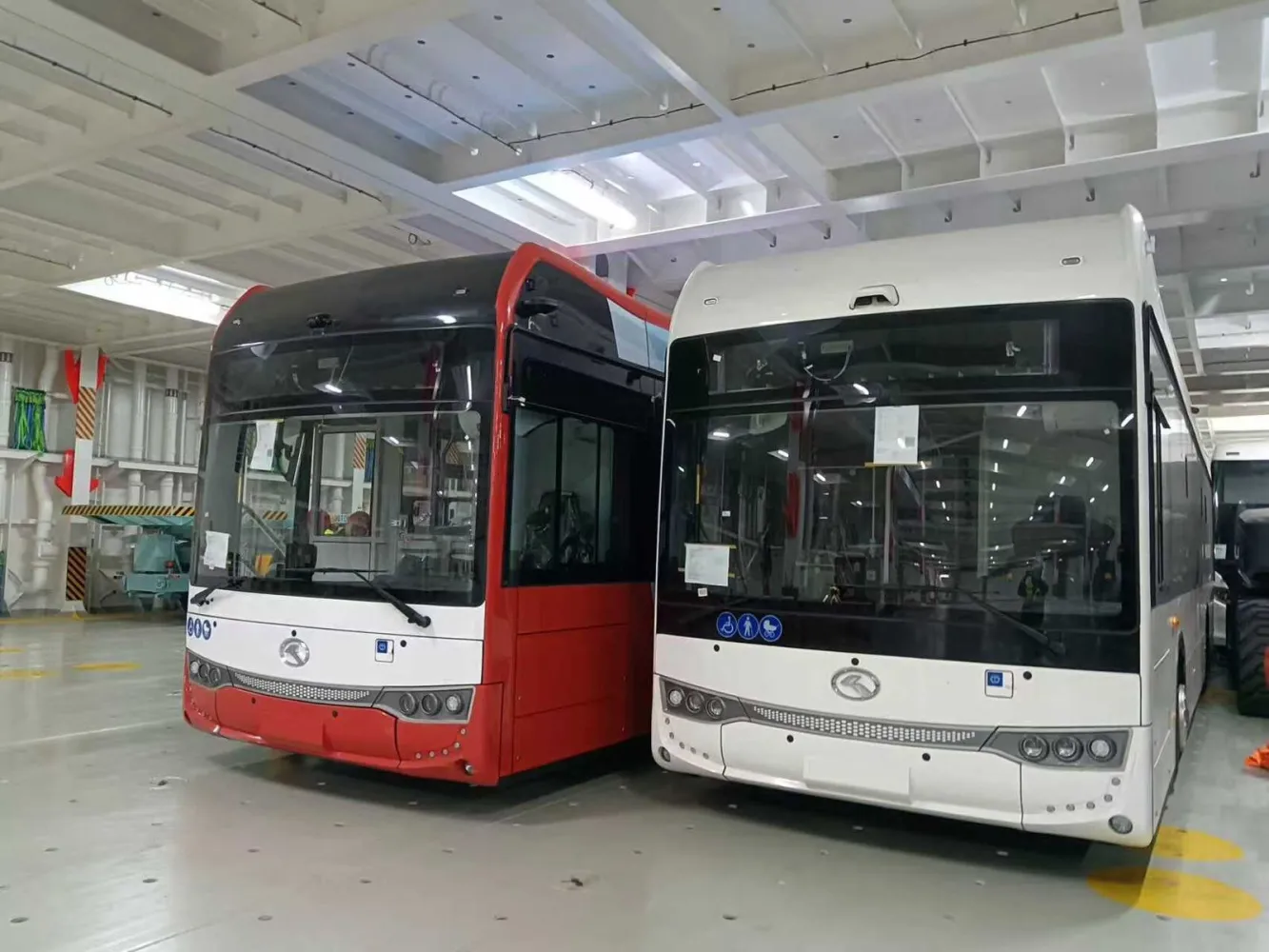
The rapid expansion of electric bus manufacturing in China has created growing demand for reliable sea transportation to Europe. Unlike standard passenger vehicles, electric buses present a different logistics profile: larger dimensions, higher unit value, substantial weight, lithium-ion battery considerations and, in many cases, limited compatibility with conventional container shipping.
For shippers, manufacturers and project logistics companies, the main question is therefore not simply how to move the buses, but which sea transport method is commercially and technically suitable: RoRo, breakbulk or a dedicated chartered vessel.
Kiev Shipping Ltd provides vessel chartering and maritime transport solutions for electric buses, buses, trucks, construction machinery and other wheeled or oversized cargoes moving from China and other Asian origins to European destinations.
Why Electric Bus Shipping Requires Special Planning
Electric buses are typically transported as complete units rather than dismantled cargo. Their dimensions often exceed standard container limitations, while their weight and battery systems introduce additional operational requirements.
Before selecting a vessel, several factors must be considered:
- overall length, width and height of each bus;
- gross unit weight;
- number of buses in the shipment;
- battery type and technical documentation;
- port restrictions;
- available loading and discharge methods;
- lifting points and securing arrangements;
- origin and destination ports;
- required transit time;
- possibility of combining the buses with other project or breakbulk cargo.
The most economical solution depends heavily on shipment size.
A small lot of buses may be suitable for an existing RoRo service, while larger consignments can justify breakbulk shipment or even the chartering of an entire vessel.
Option 1: RoRo Shipping
RoRo — roll-on/roll-off — is usually the first transportation method considered for operational buses and other wheeled vehicles.
The units are driven or towed directly onto the vessel through a stern or side ramp and secured on the vehicle deck.
Advantages of RoRo
RoRo can offer several benefits:
- limited lifting operations;
- relatively fast loading and discharge;
- reduced handling of individual vehicles;
- established liner connections on certain China–Europe routes;
- suitable conditions for self-propelled or towable units.
For smaller shipments, RoRo may therefore be commercially attractive.
However, liner availability is the main limitation.
A suitable RoRo service may not connect the required Chinese loading port with the required European destination. Space availability, dimensions, battery acceptance requirements and sailing schedules can also restrict the shipper's options.
When the cargo volume increases, the economics may change considerably.
Option 2: Breakbulk Shipping
Breakbulk shipping becomes relevant when buses cannot move efficiently through regular RoRo services or when the shipment forms part of a larger project cargo movement.
Electric buses can be loaded aboard multipurpose, general cargo or heavy-lift vessels using ship's cranes or shore cranes.
Depending on the vessel and port configuration, buses may be:
- lifted directly onboard;
- loaded using mafi trailers;
- positioned under deck;
- carried on weather deck where technically permitted;
- shipped together with trucks, machinery or other project cargo.
For larger lots, breakbulk can provide substantially more flexibility than liner RoRo.
The vessel does not necessarily need to follow a fixed liner schedule, and loading/discharge ports can be selected according to the actual project requirements.
Cargo Securing and Lashing
Correct securing is particularly important during ocean transportation.
Electric buses have a high centre of gravity compared with many conventional cargo units. Vessel movements, acceleration forces and heavy weather must therefore be considered when preparing the stowage and securing plan.
Typical arrangements can include:
- wheel chocks;
- chains;
- wire lashings;
- web lashings where appropriate;
- welded securing points;
- timber blocking;
- steel supports;
- additional deck reinforcement where required.
The final securing arrangement depends on vessel type, deck configuration, bus dimensions and the approved cargo securing plan.
For breakbulk shipments, the transport concept should be reviewed before the vessel is fixed.
Lithium-Ion Battery Considerations
Electric vehicle batteries introduce another important operational factor.
Carriers and vessel owners normally require technical information about the vehicles and batteries before accepting the cargo.
Documentation may include battery specifications, vehicle condition, state of charge, safety information and other documents required by the carrier, vessel or port.
Requirements can differ between operators and trades.
For this reason, battery-related documentation should be clarified during the early chartering stage rather than immediately before loading.
Option 3: Chartered Vessel
For larger projects, chartering an entire vessel can become the most flexible solution.
This approach is particularly relevant when dozens or hundreds of buses must be transported during one shipment or a series of shipments.
A dedicated charter allows the cargo owner to determine the required:
- loading port;
- discharge port;
- laycan;
- vessel size;
- deck configuration;
- cargo capacity;
- loading method;
- voyage schedule.
Depending on the cargo, suitable tonnage may include multipurpose vessels, general cargo vessels, heavy-lift vessels or other ships capable of carrying wheeled project cargo.
The key issue is not simply vessel size.
Deck strength, hatch dimensions, crane capacity, cargo access, stowage space and securing possibilities must all be checked before fixing the ship.
When Does Vessel Chartering Become Competitive?
There is no universal number of buses at which chartering automatically becomes cheaper than RoRo.
The result depends on:
- number and dimensions of units;
- freight market conditions;
- vessel position;
- China loading port;
- European discharge port;
- port costs;
- loading and discharge productivity;
- availability of return cargo;
- possibility of combining the buses with other cargoes.
A chartered vessel can sometimes become commercially competitive earlier than expected when a suitable ship is already positioned near the loading area.
Conversely, a liner RoRo solution may remain preferable when regular capacity is available and the shipment is relatively small.
A proper freight comparison should therefore be based on the complete voyage cost rather than only the headline freight rate.
Choosing the Right Chinese Loading Port
China offers numerous export ports, but not every port is equally suitable for breakbulk or project cargo.
The optimal loading port depends on:
- location of the bus manufacturer;
- inland transportation distance;
- terminal facilities;
- crane capacity;
- project cargo handling experience;
- vessel availability;
- port restrictions and charges.
Depending on the project, shipments can potentially move through major Chinese ports with appropriate facilities for vehicle, breakbulk and project cargo operations.
Using a nearby port does not automatically mean lower total transportation cost. A more distant port may offer better vessel availability or substantially better handling conditions.
European Discharge Options
The same principle applies to Europe.
A major container or RoRo hub is not necessarily the best discharge location for a chartered breakbulk shipment.
For project cargo, smaller ports can sometimes offer:
- lower port costs;
- less congestion;
- easier crane operations;
- better access for road transport;
- shorter delivery distance to the final destination.
The correct port should therefore be selected together with the vessel and inland delivery strategy.
Combining Electric Buses with Other Cargo
One advantage of breakbulk chartering is the possibility of combining different cargo types.
A vessel carrying electric buses may also accommodate:
- trucks;
- construction machinery;
- agricultural machinery;
- trailers;
- industrial equipment;
- steel structures;
- transformers;
- other oversized project cargo.
Cargo combination can improve vessel utilisation and reduce the freight cost allocated to each individual unit.
This is particularly relevant for shipments from China to Europe, where project cargo parcels may originate from several manufacturers or suppliers.
RoRo vs Breakbulk vs Chartered Vessel
The transportation method should be selected according to the actual project.
RoRo is generally suitable when regular liner space is available and the number of vehicles is limited.
Breakbulk provides greater flexibility for larger units, mixed cargoes and routes where liner services are unsuitable.
Dedicated vessel chartering becomes particularly relevant for larger programmes requiring control over the vessel, schedule and loading/discharge ports.
In many projects, obtaining quotations for all three alternatives provides the most reliable commercial comparison.
Kiev Shipping Ltd — Electric Bus and Project Cargo Chartering
Kiev Shipping Ltd has been working in international ship chartering and maritime transportation for more than 25 years.
The company provides chartering support for:
- electric buses;
- conventional buses;
- trucks and trailers;
- construction machinery;
- agricultural machinery;
- heavy equipment;
- oversized cargo;
- breakbulk cargo;
- project cargo.
Our work includes vessel search, freight negotiations, charter-party coordination, voyage planning and operational support.
For electric bus shipments from China to Europe, the objective is to identify the most commercially efficient transport solution rather than force the cargo into one predetermined shipping method.
Depending on shipment size and route, that solution may be RoRo, breakbulk or a dedicated chartered vessel.
For further information about our project cargo services, see Project Cargo Chartering.
Ship Chartering · Maritime Brokerage · Commercial Ship Management
We know the solution to the problem that has not yet occurred.
Service overview: Project Cargo Services and Breakbulk and Project Cargo Services.
See also: Heavy Machinery Shipping by Sea · Transformer Cargo Chartering · Freight Indication vs Firm Freight Offer · more in Breakbulk & Project Cargo.
Language versions: Українська версія · Русская версия