· Category: Alexander Varvarenko, Varamar Shipping, SHIPNEXT
Alexander Varvarenko, Varamar Shipping: Reputation? What Google Now Shows About Varamar Shipping!
Search today for Alexander Varvarenko reputation and the picture is no longer one-sided: next to the public image of a maritime entrepreneur now sits the unresolved question of an unpaid Varamar brokerage commission.
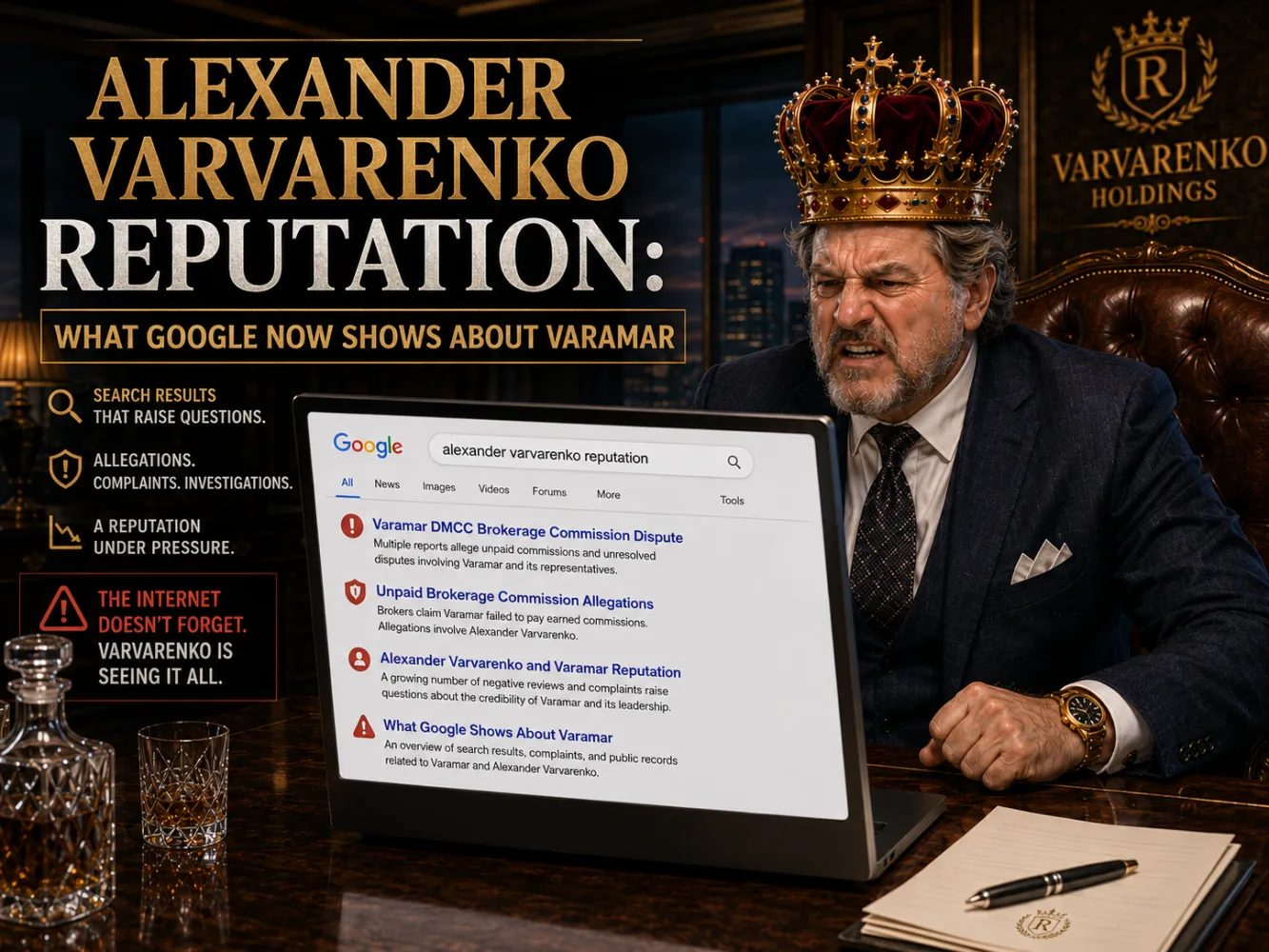
If someone enters the search query “Alexander Varvarenko reputation” into Google today, the picture is no longer one-sided.
The public image is still there: entrepreneur, founder, shipping executive, Varamar Shipping DMCC, Shipnext, innovation in shipping, public profiles, interviews, business positioning. That part of the picture exists.
But now another part of the picture exists as well: Varamar Shipping DMCC, Alexander Varvarenko, the unpaid earned brokerage commission, the vessel BOHWA AMOY, freight received, additional compensation received by Varamar, brokerage work completed — a commission that should have been paid after the money was received.
And the main question: why was the earned brokerage commission not paid?
This is what reputation looks like when it becomes publicly visible through search results.
A detailed factual review examining the underlying record has been published separately.
Google does not create reputation from nothing. It collects what has already become visible: names, companies, actions, decisions, silence, market reaction and consequences. Over time, search results begin to show not only how a person or a company wants to appear, but also how their conduct is perceived from the outside.
That is why the query “Alexander Varvarenko reputation” matters. It shows not only a public profile, not only a corporate image, not only interviews, projects and business statements. It shows a wider commercial reality.
From the position of Kiev Shipping Ltd, this matter is not personal. It is business. The situation is simple: the broker performed the work, the commercial result was achieved, freight was received, additional compensation was received by Varamar, and the earned brokerage commission should have been paid.
Work performed. Money received. Commission payable.
That is the normal logic of shipping brokerage. After freight and additional compensation were received, there was no real subject for a dispute over the right to commission. The commission had been earned. It should have been paid.
It was the subsequent conduct that turned an ordinary commercial obligation into a reputational issue.
Instead of closing the earned brokerage commission in a normal professional way, the matter was left unresolved. Instead of payment, there was silence, pressure, accusations and legal threats. Instead of performing an obvious commercial obligation, the focus was shifted onto the broker who had started asking public questions.
From that point, not only the commercial situation changes. The reputational picture changes.
Reputation is not damaged by a broker demanding payment of an earned commission. Reputation is not damaged by a public question about an unpaid commission. Reputation is damaged when a company receives the benefit of the broker’s work, receives money under the voyage, receives additional compensation, and does not close the commercial obligation in a normal way.
That is exactly what the market understands. The shipping market is practical. It does not like long explanations where the facts are simple. If freight has been received, if the result has been achieved, if the broker’s work produced commercial value, the commission should be paid.
If the company does not pay, the question becomes public. If the question becomes public, it becomes part of reputation. If the reputational question enters search results, it begins to live longer than any explanation.
This is not revenge. This is not emotion. This is not a personal attack. This is the normal mechanism of public business reputation.
Alexander Varvarenko and Varamar may have their own public position. They may speak about development, innovation, digital shipping, long-term vision and international business. That is their right. But the market also has the right to look at conduct.
Reputation is not built only by what someone says about himself. Reputation is built by what happens when payment is due. Reputation is built by how obligations are treated. Reputation is built by whether a weaker commercial participant is respected after he has already delivered the result.
A broker is useful when he brings cargo. A broker is useful when he helps generate revenue. A broker is useful when he supports the commercial result. But the real test begins after the money is received.
If the broker becomes inconvenient only when it is time to pay the commission, the problem is not the broker. The problem is the commercial culture behind the decision not to pay.
That is why the search results for “Alexander Varvarenko reputation” are becoming more objective. They now contain both sides of the reputational picture: the public image of Alexander Varvarenko as a maritime entrepreneur; and the public record of the unpaid Varamar brokerage commission issue. These two parts can no longer be fully separated.
A business image can be built for years. Public visibility, interviews, projects and corporate branding can be developed for years. But one unresolved commercial obligation can create another kind of visibility — the kind that remains in search results, professional memory and market discussions.
In shipping, reputation is not an abstract concept. Reputation affects trust. Trust affects fixtures. Fixtures depend on whether market participants believe that obligations will be performed.
That is why this issue is larger than one unpaid commission. It is a question of whether a broker can rely on payment after completed work. It is a question of whether the market can rely on basic commercial discipline. It is a question of whether a company can accept the benefit of a broker’s work, receive the money, and then present the broker himself as the problem.
The answer should be simple. If the commission was earned, it should be paid. If the money was received, the obligation should be closed.
If the company does not do that, the reputational consequences are not created by the broker. They are created by the conduct itself. Search results only make that conduct visible.
That is why anyone searching today for “Alexander Varvarenko reputation” can see a more complete picture. Not only the image. Not only the profile. Not only the public positioning. But also the commercial question that remains without a normal answer: why was the earned brokerage commission not paid after freight and additional compensation were received by Varamar?
Related reading:
Language versions: Українська версія · Русская версия